
Email Marketing

Email Marketing

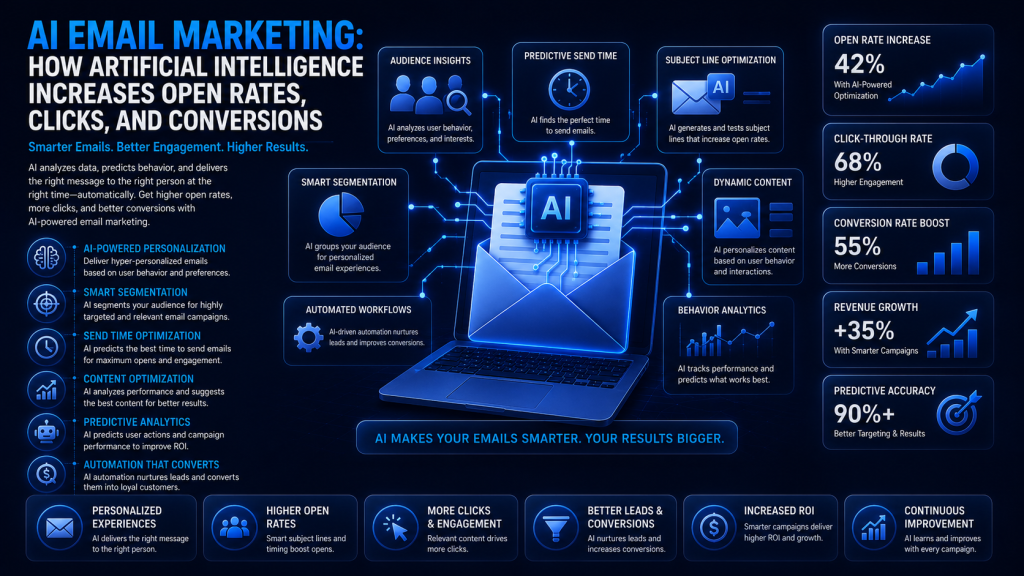
AI Email Marketing: How Artificial Intelligence Increases Open Rates, Clicks, and Conversions

Introduction AI email marketing uses artificial intelligence to personalize content, predict the best send times, and optimize campaigns automatically. Businesses are adopting it because it consistently improves open rates, clicks, and conversions while saving hours of manual work. This guide explains how AI is transforming email marketing and how you can start using it today. What Is AI Email Marketing? AI email marketing applies machine learning and predictive analytics to traditional email campaigns. Instead of sending the same message to your entire list at a fixed time, AI tailors content, timing, and subject lines to each subscriber based on their behavior and preferences. How AI Is Transforming Email Marketing AI removes much of the guesswork from email marketing. It analyzes historical engagement data to predict what content, timing, and offers will resonate with each subscriber, then automatically adjusts campaigns for better performance without constant manual oversight. Benefits of AI Email Marketing Higher open rates through optimized subject lines Better click-through rates from relevant content Increased conversions via personalized recommendations Smarter, dynamic audience segmentation Significant time savings through automation Improved ROI and more efficient campaign optimization AI Email Marketing vs Traditional Email Marketing Factor Traditional Email Marketing AI Email Marketing Personalization Basic (name, company) Deep, behavior-based Segmentation Manual, static lists Dynamic, predictive Subject Lines Manually written AI-generated & tested Send Time Fixed schedule Predicted optimal time Content Creation Fully manual AI-assisted drafting Optimization Periodic A/B tests Continuous, automated Scalability Limited by manual effort Scales with automation How AI Works in Email Marketing Machine learning identifies patterns in subscriber behavior Predictive analytics forecasts likely engagement and purchases Natural Language Processing (NLP) helps generate and refine copy Dynamic content adjusts automatically per recipient Smart automation triggers emails based on real-time actions Key AI Email Marketing Features AI-generated and tested subject lines AI-powered email copywriting assistance Smart audience segmentation Predictive send-time optimization Personalized product recommendations Automated lead nurturing and lifecycle workflows Cart abandonment recovery sequences AI-powered A/B testing and performance predictions Step-by-Step Guide to Implement AI Email Marketing Define clear campaign goals Choose an AI-enabled email marketing platform Build and segment your email list Create AI-assisted email content Set up automated workflows and triggers Personalize campaigns using behavioral data Test variations and optimize continuously Analyze results and refine your strategy Best AI Email Marketing Tools Mailchimp AI – beginner-friendly automation and content suggestions HubSpot AI – CRM-integrated personalization at scale Klaviyo – strong for e-commerce segmentation and predictions ActiveCampaign – advanced automation workflows Brevo and Omnisend – affordable AI features for small businesses ChatGPT, Gemini, and Claude – AI assistance for email copywriting Real-World Use Cases E-commerce product recommendations based on browsing history AI-optimized welcome email series for new subscribers Lead nurturing campaigns tailored to buyer intent Abandoned cart recovery with dynamic incentives Re-engagement campaigns for inactive subscribers Common AI Email Marketing Mistakes Over-automating and losing the human touch Using generic “personalization” that feels robotic Ignoring data privacy and consent requirements Buying email lists instead of growing organically Skipping testing before scaling a campaign Relying entirely on AI-generated content without review AI Email Marketing Best Practices Always review and edit AI-generated content before sending Use behavioral data, not just demographics, for segmentation Test AI-suggested subject lines against your own Combine automation with periodic manual campaign reviews Respect privacy regulations like GDPR and CAN-SPAM Continuously monitor performance and refine workflows How to Measure Success Open rate and click-through rate (CTR) Conversion rate and revenue per email Bounce rate, unsubscribe rate, and spam complaint rate Overall engagement rate and ROI Frequently Asked Questions Is AI email marketing expensive? Many platforms include AI features at standard pricing tiers, making it accessible for small businesses and larger companies alike. Does AI email marketing comply with GDPR and CAN-SPAM? AI tools don’t override compliance requirements; businesses still need proper consent and opt-out processes regardless of automation. Can small businesses benefit from AI email marketing? Yes. Even basic AI segmentation and subject line testing can meaningfully improve results for smaller email lists. Will AI replace human marketers? No. AI handles repetitive optimization tasks, but human oversight remains essential for brand voice, strategy, and creative direction Future of AI Email Marketing Hyper-personalization based on real-time behavior Predictive customer journeys across multiple channels AI agents managing entire campaign workflows autonomously Privacy-first AI marketing built around first-party data Conclusion AI email marketing is quickly becoming essential for businesses that want higher engagement and stronger long-term growth. By combining AI-powered personalization, automation, and continuous optimization with thoughtful human oversight, you can build email campaigns that consistently perform better and scale efficiently. Transform Your Email Marketing With DIGIDIKSHA DIGIDIKSHA offers expert AI-powered email marketing and automation services, from strategy to execution. Contact us today for a free consultation, email marketing audit, and a customized AI automation strategy built to increase your open rates, clicks, and conversions.
Email Marketing

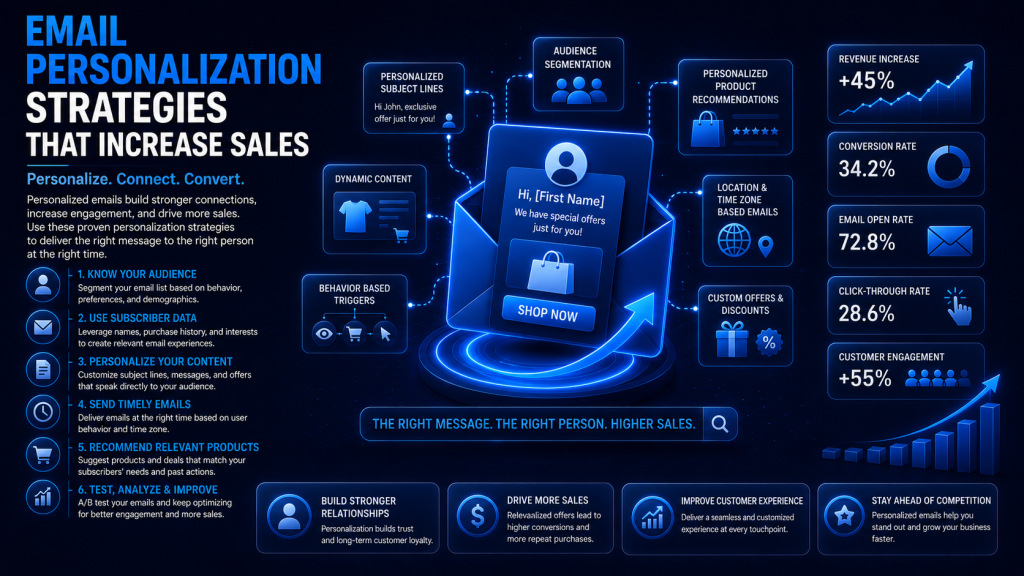
Email Personalization Strategies That Increase Sales

Introduction Generic, one-size-fits-all emails get ignored. Personalized emails, built around real customer data, consistently earn higher opens, clicks, and sales. This guide breaks down how to use email personalization strategically to build stronger customer relationships and drive measurable revenue. What Is Email Personalization? Email personalization means tailoring content, offers, and messaging to individual subscribers based on their data and behavior. Basic personalization uses a first name; advanced personalization uses purchase history, browsing behavior, and lifecycle stage to shape entire campaigns. Why Personalization Increases Sales Higher open rates from relevant subject lines Increased click-through rates on tailored content Stronger customer engagement and trust Improved conversion rates and revenue per email Higher customer lifetime value over time Types of Email Personalization First-name and basic demographic personalization Location-based offers and content Purchase history and browsing behavior triggers Customer interests and lifecycle stage targeting Dynamic product recommendations and offers Build a Strong Customer Data Strategy Collect customer data ethically through clear consent, such as signup forms and preference centers. Keep data clean and up to date, segment audiences thoughtfully, and stay mindful of privacy regulations like GDPR and CAN-SPAM when handling customer information. Email Segmentation Strategies Demographics: age, gender, or job role Geography: location-based offers and timing Purchase history: repeat buyers vs. first-timers Engagement level: active vs. inactive subscribers Customer lifecycle: new, returning, or lapsed customers Personalized Campaigns That Drive Sales Welcome emails introducing new subscribers to your brand Product recommendations based on browsing or purchases Abandoned cart and browse abandonment reminders Birthday and anniversary offer  Re-engagement campaigns for inactive subscribers Loyalty program and upsell/cross-sell emails Dynamic Content in Email Marketing Dynamic content changes automatically based on the recipient, showing different images, products, or offers to different segments within the same email template. This increases relevance without requiring separate campaigns for every audience segment. Marketing Automation for Personalization Automation workflows trigger emails based on customer actions, such as a purchase, cart abandonment, or website visit. Combined with CRM integration, these workflows nurture leads and guide customers through the funnel with minimal manual effort. Best Practices for Email Personalization Write subject lines that reflect real customer interests Use customer names naturally, not excessively Segment audiences before designing campaigns Personalize CTAs to match customer intent Test send times for different segments A/B test personalization strategies regularly Avoid over-personalization that feels invasive Common Personalization Mistakes Using outdated or incorrect customer data Over-personalizing in ways that feel intrusive Poor or overly broad segmentation Ignoring mobile email optimization Sending offers irrelevant to the customer Skipping A/B testing on personalized campaigns Emailing too frequently and causing fatigue Measuring Success Open rate and click-through rate (CTR) Conversion rate and revenue per email Unsubscribe rate and bounce rate Customer lifetime value (CLV) and overall ROI Track these metrics using tools like Klaviyo, Mailchimp, HubSpot, and Google Analytics 4. Frequently Asked Questions 1.Does personalization really increase sales? Yes, personalized emails consistently outperform generic campaigns in open rates, clicks, and conversions when built on accurate customer data. 2.Can small businesses use email personalization? Yes. Even basic segmentation and first-name personalization can meaningfully improve engagement for small email lists. 3.Is email personalization expensive to implement? Most modern email platforms include segmentation and automation features at accessible price points, making personalization achievable for most budgets. Conclusion Email personalization transforms generic campaigns into relevant, revenue-driving conversations with your customers. Start with solid data collection and segmentation, then layer in automation and dynamic content to build campaigns that consistently increase engagement and sales. Build Personalized Campaigns With DIGIDIKSHA DIGIDIKSHA offers expert email marketing, marketing automation, customer segmentation, and complete digital marketing services to help you build personalized campaigns that convert. Contact us today to schedule a consultation and start driving measurable sales growth through smarter, more relevant email marketing.

Email Marketing

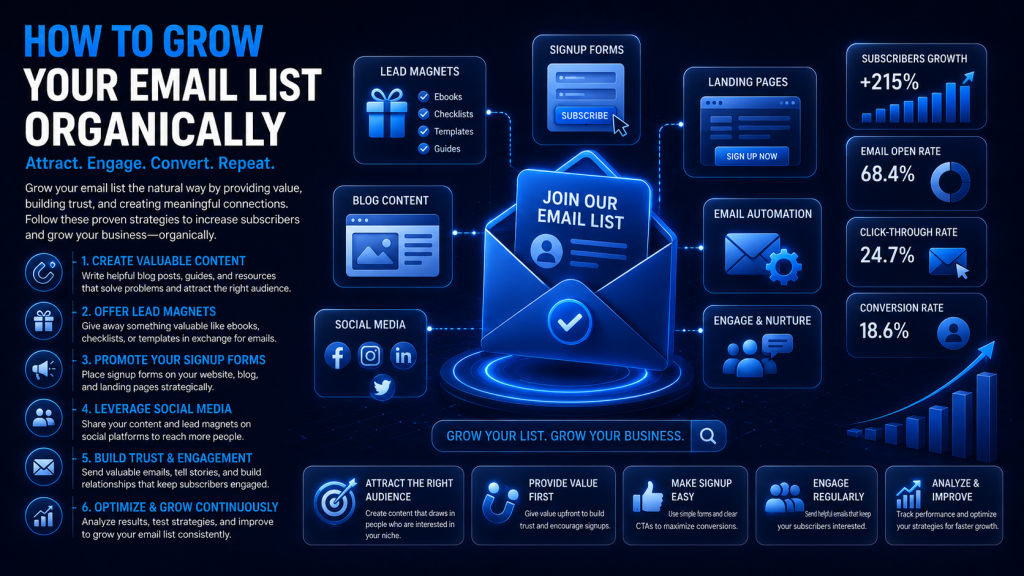
How to Grow Your Email List Organically

Introduction Email marketing remains one of the highest-ROI channels in digital marketing, but only when your list is built the right way. A smaller, engaged list of people who genuinely want to hear from you will always outperform a large, purchased list. This guide covers how to grow your email list organically, using ethical, permission-based strategies. What Is Organic Email List Growth? Organic email list growth means earning subscribers through content, value, and consent, rather than buying contact lists. It relies on permission-based marketing, where people willingly opt in because they trust your brand and want what you offer. Why Organic Growth Matters Higher engagement and open rates Better email deliverability and sender reputation Stronger customer trust and relationships Higher conversion rates over time Compliance with email marketing regulations Know Your Target Audience Before asking for an email address, understand who your ideal subscriber is. Identify their pain points, interests, and what stage of the buyer journey they’re in, then build content and offers that speak directly to those needs. Create an Irresistible Lead Magnet E-books and in-depth guides for complex topics Checklists and templates for quick, practical wins Free tools or calculators for interactive value Webinars and free courses for deeper engagement Discount codes for e-commerce audiences Match the lead magnet format to what your specific audience finds most valuable and easy to consume. Optimize Your Website for Signups Homepage and blog opt-in forms Well-timed exit-intent popups Sticky bars and slide-in forms Dedicated, focused landing pages Mobile-friendly forms with minimal fields Create Content That Attracts Subscribers Evergreen blog posts, videos, infographics, and downloadable resources naturally encourage signups when they solve real problems. Strong SEO ensures this content reaches new visitors who are actively searching for solutions. Use SEO to Drive Organic Subscribers Target keywords that match search intent, optimize on-page elements, and build internal links between related content. Ranking in search results and AI Overviews brings a steady stream of new visitors who can convert into subscribers. Promote Your Newsletter Organically Share newsletter highlights on LinkedIn and Instagram Engage in relevant communities and forums Guest blog on industry-relevant sites Mention your newsletter during webinars and podcasts Partner with complementary brands for cross-promotion Improve Signup Conversion Rates Write clear, benefit-driven CTAs Reduce form fields to the essentials Add social proof and subscriber testimonials A/B test different signup form designs Improve page speed and mobile experience Welcome New Subscribers A strong welcome sequence introduces your brand, delivers the promised lead magnet, sets expectations for email frequency, and encourages early engagement, such as replying or following on social media. Segment and Nurture Your List Segment by interests, behavior, or purchase history Personalize campaigns based on subscriber activity Build automation workflows for consistent nurturing Run re-engagement campaigns for inactive subscribers Regularly clean your list to maintain deliverability Common Email List Building Mistakes Buying email lists instead of growing organically Offering a weak or irrelevant lead magnet Writing vague, low-urgency CTAs Asking for too much information upfront Ignoring mobile form optimization Sending inconsistent or infrequent emails Never removing inactive subscribers Best Practices for Sustainable List Growth Always use double opt-in for quality subscribers Keep lead magnets specific and highly relevant Test CTAs and form placement regularly Prioritize value over frequency in every email Monitor deliverability and sender reputation Combine SEO, content, and social promotion together Measuring Success Subscriber growth rate and signup conversion rate Open rate and click-through rate (CTR) Unsubscribe rate and bounce rate Overall email marketing ROI Track these using tools like Mailchimp, ConvertKit, HubSpot, and Google Analytics 4. Frequently Asked Questions 1.Why shouldn’t I buy email lists? Purchased lists have low engagement, hurt deliverability, and often violate email marketing regulations and platform terms of service. 2.How often should I email subscribers? Weekly or biweekly is a reliable starting point; prioritize consistency and value over sheer frequency. 3.Is email marketing still effective? Yes, it remains one of the highest-ROI channels, especially when the list is built organically and nurtured consistently. Conclusion Organic email list growth takes more patience than buying a list, but it delivers a subscriber base that actually engages, trusts your brand, and converts. Focus on valuable lead magnets, smart SEO, and consistent nurturing to build a list that drives long-term growth. Grow Your Email List With DIGIDIKSHA DIGIDIKSHA offers expert email marketing, lead generation, content marketing, and complete digital marketing services to help you build a high-quality, organically grown subscriber base. Contact us today to schedule a consultation and turn your email list into a sustainable growth engine.

Email Marketing

Email Marketing Best Practices to Increase Sales

Introduction In a world overflowing with social media noise and paid ads, email marketing remains one of the most powerful, direct, and cost-effective channels available to businesses of any size. With an average return of $36 for every $1 spent, it consistently outperforms every other digital marketing channel on ROI — and in 2026, that is truer than ever. For small businesses, startups, and e-commerce brands, email marketing is not just about sending newsletters. When done right, it is a precision tool for building long-term customer relationships, driving repeat purchases, nurturing leads, and increasing sales without relying on expensive paid advertising. In this guide, you will discover the top 10 email marketing best practices that actually move the needle, the most common mistakes to avoid, the trends shaping the industry in 2026, and the best tools to get started. Whether you are brand new to email marketing or ready to take your campaigns to the next level, this guide is built for you. What is Email Marketing? Unlike social media posts that compete with thousands of other pieces of content in an algorithm-controlled feed, emails land directly in front of the recipient — on their terms. That direct, personal line of communication makes email one of the most powerful relationship-building tools in digital marketing. At its best, email marketing is not about blasting promotions at a cold list. It is about delivering the right message, to the right person, at exactly the right time — and doing that consistently is what builds the kind of customer loyalty that drives sustainable revenue growth. Why Email Marketing is Important for Increasing Sales Here is why investing in a strong email marketing strategy pays off directly at the bottom line:-                 •       High ROI: Email marketing delivers an average of $36 return for every                          $1 invested — the highest ROI of any marketing channel available.•                                 Direct customer communication: Your message goes straight to the                           inbox, bypassing algorithms and competitive noise entirely.                  •       Personalized marketing: Emails can be tailored to individual                                          preferences, behavior, and purchase history at scale.                  •       Customer retention: Regular, valuable communication keeps your                                 brand top-of-mind between purchases, reducing churn.                  •       Lead nurturing: Automated sequences guide potential customers                                  from initial interest through to their first purchase.                   •       Brand trust: Consistent, helpful emails position your business as a                                 credible, expert resource in your field.                   •       Increased website traffic: Every email is an opportunity to drive                                   clicks back to your site, product pages, or blog.                   •       Repeat purchases: Targeted post-purchase and loyalty emails                                       generate significantly more revenue from existing customers.  Example: An e-commerce clothing brand sends a personalized restock alert to customers who previously viewed a sold-out item. That single automated email generates a 28% conversion rate — outperforming any paid ad campaign in the same period. Top 10 Email Marketing Best Practices to Increase Sales 1. Build a Quality Email List The foundation of every successful email campaign is a clean, permission-based list of people who genuinely want to hear from you. Never purchase email lists — they damage your sender reputation, drive spam complaints, and deliver zero real ROI.Instead, build your list organically with these proven methods: •       Offer valuable lead magnets (free guides, templates, discount codes, or                          checklists) in exchange for an email address•       Add newsletter signup forms to your website’s homepage, blog posts, and                     checkout page•       Use exit-intent popups that trigger when a visitor is about to leave your site•                 Run social media campaigns that drive followers to a dedicated email signup               landing page 2. Segment Your Audience Sending the same email to your entire list is one of the fastest ways to drive up unsubscribes. Audience segmentation — dividing your list into targeted groups — allows you to send highly relevant messages that resonate and convert.Segment your list based on:•       Purchase history (what they bought and when)•       Browsing or engagement behavior (what pages they visited, what emails they               clicked)•       Demographics (age, location, job role)•       Stage in the customer journey (new lead, active customer, lapsed                                   buyer)Segmented campaigns generate 14% higher open rates and 101% higher           click rates than non-segmented campaigns, according to Mailchimp research. 3. Write Compelling Subject Lines Your subject line is the single most important factor determining whether your email gets opened or ignored. With the average person receiving 120+ emails per day, you have roughly 3 seconds to earn their attention.Examples of high-performing subject lines:•       “Your exclusive discount expires in 24 hours “•       “We noticed you left something behind…”•      

wpChatIcon
wpChatIcon
Scroll to Top