Digital Marketing

Digital Marketing

Top Digital Marketing Trends for 2026

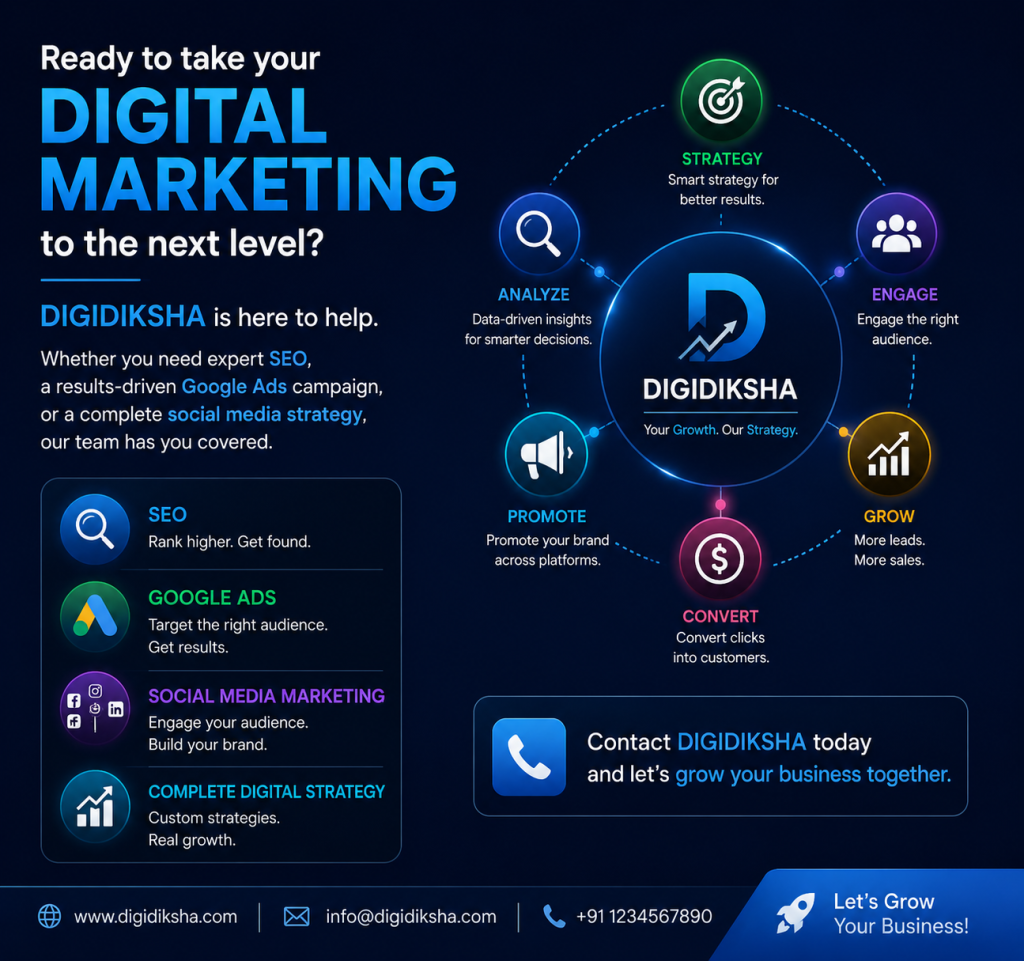
Introduction Digital marketing keeps shifting as AI, privacy rules, and consumer behavior evolve. Businesses that stay updated gain a real competitive edge; those that don’t fall behind quickly. This guide covers the trends that matter most in 2026 and how to act on them. Why Following Digital Marketing Trends Matters Stronger competitive advantage in your industry Better customer experience and engagement Improved ROI from marketing spend More sustainable, long-term business growth Top Digital Marketing Trends for 2026 AI-Powered Marketing & Generative AI AI tools now help generate content, analyze data, and personalize campaigns at scale. Businesses should use AI to speed up production while keeping human review for accuracy, tone, and brand voice. AI Overviews & AI Search Optimization Google’s AI Overviews are reshaping search results. Ranking well now means creating clear, well-structured, genuinely helpful content that AI systems can easily summarize and cite. SEO Beyond Keywords: Topical Authority & E-E-A-T Modern SEO rewards sites that demonstrate real experience and expertise across a topic, not just keyword-optimized pages. Build content clusters that cover a subject comprehensively. First-Party Data & Privacy-First Marketing As third-party cookies fade, collecting first-party data through signups, surveys, and loyalty programs becomes essential for personalization and targeting. Hyper-Personalization Customers expect tailored experiences based on their behavior and preferences. Use segmentation and dynamic content to deliver relevant messaging across every channel. Marketing Automation Automated workflows for email, lead nurturing, and follow-ups save time while improving consistency and response speed across the customer journey. Voice and Visual Search Optimization More users search by voice or image. Optimize content with natural, conversational phrasing and descriptive image alt text to capture this growing traffic. Short-Form Video & YouTube Marketing Short-form video continues to drive high engagement, while YouTube remains a powerful search engine for long-form, educational content. LinkedIn Marketing for B2B LinkedIn remains the top platform for reaching business decision-makers through thought leadership content and targeted outreach. Influencer & Creator Partnerships Micro-influencers often deliver stronger engagement and trust than large-scale influencers, especially for niche audiences. Community-Led Marketing Brands are building owned communities on platforms like Discord and private groups to deepen loyalty beyond one-off transactions. Interactive Content Quizzes, polls, and calculators boost engagement and generate first-party data while providing genuine value to visitors. Conversational Marketing AI chatbots and assistants now handle common questions instantly, improving response time and freeing teams for higher-value conversations. Email Marketing Automation & Personalization Behavior-triggered, personalized email sequences continue to deliver some of the highest ROI in digital marketing. Omnichannel Customer Experience Customers expect a seamless experience across website, social, email, and in-store touchpoints, requiring integrated marketing systems. Conversion Rate Optimization (CRO) Testing and refining landing pages, CTAs, and checkout flows squeezes more value from existing traffic without increasing ad spend. Local SEO & Google Business Profile An optimized Google Business Profile with reviews and accurate details remains critical for local search visibility. Data Analytics & Predictive Marketing Predictive analytics helps forecast customer behavior, allowing marketers to act proactively rather than reactively. Emerging Technologies Shaping Marketing AI agents automating multi-step marketing tasks Customer Data Platforms (CDPs) unifying customer data Early-stage AR and VR experiences for select industries How Small Businesses Can Adapt Prioritize one or two high-impact trends at a time, such as Google Business Profile optimization and email automation, using affordable tools before expanding into more advanced AI or automation systems. Common Mistakes to Avoid Chasing every new trend without a clear strategy Ignoring analytics and performance data Over-relying on AI without human review Neglecting mobile optimization Publishing low-quality, unhelpful content Best Practices for 2026 Build topical authority instead of chasing single keywords Invest in first-party data collection early Combine AI efficiency with human oversight Prioritize customer experience across every channel Test and measure every campaign before scaling Measuring Success Organic traffic and conversion rate Customer acquisition cost (CAC) and CLV ROAS and engagement rate Track these using Google Analytics 4, Google Search Console, and Looker Studio. Frequently Asked Questions Is SEO still important in 2026? Yes. SEO has evolved toward topical authority and AI search optimization, but strong, helpful content remains essential. How can small businesses compete with limited budgets? Focus on high-impact, low-cost trends like local SEO and email automation before investing in advanced AI tools. Which trend should beginners focus on first? Start with first-party data collection and email marketing automation, since both build a foundation for every other strategy. Conclusion Digital marketing in 2026 rewards businesses that combine AI efficiency with genuine customer focus. Prioritize the trends most relevant to your goals, test consistently, and keep learning to build a future-ready marketing strategy. Future-Proof Your Marketing With DIGIDIKSHA DIGIDIKSHA offers expert SEO, AI search optimization, Google Ads, content marketing, and complete digital marketing services to help your business stay ahead of the competition. Contact us today to schedule a consultation and build a strategy that drives sustainable growth in 2026 and beyond.

Digital Marketing

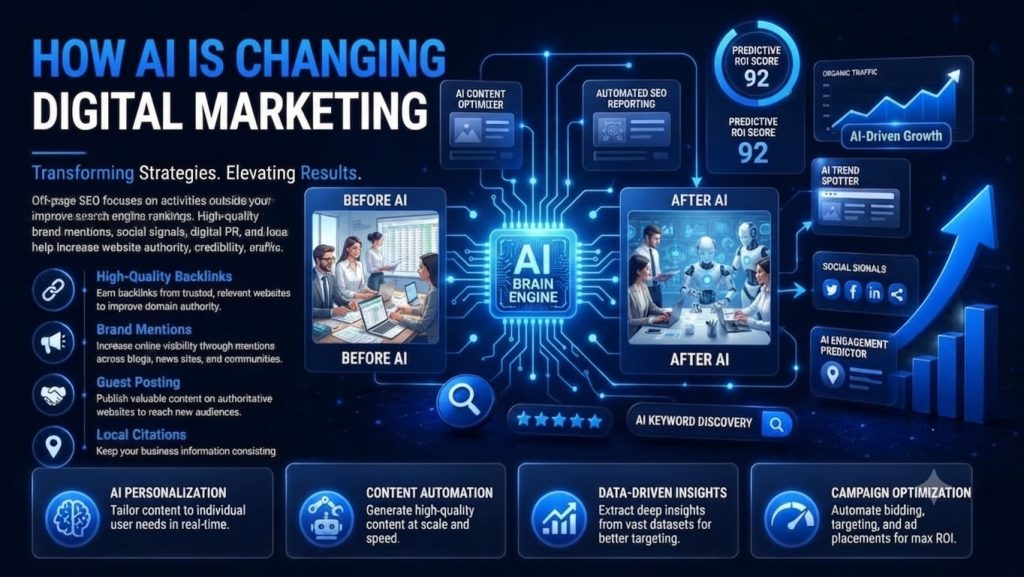
How AI Is Changing Digital Marketing: The Future of Smarter Marketing

Introduction Artificial Intelligence is no longer a futuristic concept in marketing — it’s already shaping how businesses reach, understand, and convert customers every single day. From writing content to predicting customer behavior, AI is helping marketers work faster, smarter, and more precisely than ever before. Businesses of every size are adopting AI-powered marketing solutions because the results are hard to ignore: better efficiency, deeper insights, and stronger ROI. In this guide, you’ll learn exactly how AI is transforming 16 core areas of digital marketing, the tools leading the shift, the challenges to watch for, and how to use AI responsibly to grow your business without losing the human touch that builds real trust. Table of Contents What Is AI in Digital Marketing? Why AI Is Revolutionizing Digital Marketing Benefits of AI in Digital Marketing How AI Is Changing Different Areas of Digital Marketing Popular AI Marketing Tools Challenges of AI in Digital Marketing Best Practices for Using AI Responsibly Future Trends in AI and Digital Marketing AI vs Traditional Digital Marketing Common Mistakes to Avoid AI Marketing Checklist Frequently Asked Questions Conclusion What Is AI in Digital Marketing? AI in digital marketing refers to the use of artificial intelligence, machine learning, and automation to analyze data, personalize experiences, and execute marketing tasks with minimal manual effort. Instead of relying purely on manual research and guesswork, AI helps marketers process massive amounts of data, spot patterns, and make faster, more informed decisions across every channel. Why AI Is Revolutionizing Digital Marketing Traditional marketing relied heavily on manual processes, broad targeting, and after-the-fact reporting. AI changes that by enabling real-time personalization, predictive insights, and automation at a scale no human team could match alone. Businesses that adopt AI-powered marketing gain a real competitive edge — reaching the right customer, with the right message, at exactly the right time. Benefits of AI in Digital Marketing Improved efficiency through automation of repetitive, time-consuming tasks Better customer insights drawn from massive, complex datasets Personalized experiences delivered to each individual customer Increased ROI through smarter targeting and budget allocation Faster decision-making powered by real-time data analysis Automation of repetitive tasks like reporting and scheduling Enhanced customer engagement through timely, relevant interactions How AI Is Changing Different Areas of Digital Marketing AI is reshaping nearly every corner of digital marketing. Here’s a detailed look at 16 key areas and exactly how AI is transforming each one. 1. AI-Powered SEO AI-powered SEO uses machine learning to analyze search data, optimize content, and adapt to algorithm changes faster than manual methods ever could. AI tools scan SERPs, study competitor content, and suggest real-time optimizations based on live ranking factors. Real-world example: tools like Surfer SEO score your content against top-ranking pages instantly as you write. Best practice: use AI insights as a strong starting point, then refine with human expertise and judgment. Tip: combine AI SEO tools with real Google Search Console data for the most accurate picture. 2. AI Content Creation AI content creation tools help draft blog posts, ad copy, product descriptions, and social captions in a fraction of the time. This speeds up ideation and first drafts, freeing writers to focus on strategy, nuance, and polish. Example: tools like ChatGPT, Claude, and Jasper can generate outlines and full drafts within minutes. Best practice: always edit AI drafts for accuracy, brand voice, and true originality before publishing. Tip: use AI for high-volume tasks and rely on human writers for high-stakes, brand-defining content. 3. AI Keyword Research AI keyword research uses machine learning to identify keyword opportunities, search intent, and content gaps at scale. AI processes massive datasets to surface patterns and semantic clusters that would take humans far longer to find manually. Example: AI-powered features in tools like Semrush group related keywords into topic clusters automatically. Best practice: always validate AI suggestions against real search volume and actual user intent. Tip: use keyword clustering to build stronger topical authority across your site. 4. AI Chatbots and Customer Support AI chatbots are automated tools that answer customer questions, qualify leads, and provide support around the clock. They handle repetitive queries instantly, reducing wait times and support costs significantly. Example: an e-commerce chatbot answering shipping questions and recommending products in real time. Best practice: always offer an easy, visible path to a human agent for complex issues. Tip: train your chatbot regularly using real customer questions and conversation data. 5. AI in Social Media Marketing AI in social media marketing helps plan content, analyze engagement, and even generate post ideas automatically. It identifies optimal posting times, trending topics, and audience sentiment without manual guesswork. Example: AI scheduling tools suggesting the best time to post based on your past engagement data. Best practice: let AI handle scheduling and analysis, but keep captions authentic and genuinely on-brand. Tip: use AI sentiment analysis tools to catch potential PR issues early. 6. AI Email Marketing and Automation AI in email marketing personalizes subject lines, segments audiences, and automates entire email sequences. It predicts the best send times and personalizes content for each subscriber automatically, at scale. Example: AI-powered platforms can auto-build full email campaigns, complete with copy and segments, from a single prompt. Best practice: always test AI-generated subject lines against your own before fully committing. Tip: use AI-driven segmentation to send more relevant, targeted emails to each group. 7. AI in Paid Advertising (Google Ads & Social Ads) AI in paid advertising optimizes targeting, bidding, and even ad creative in real time. Machine learning continuously adjusts bids and audiences automatically to maximize your return on ad spend. Example: Google’s automated bidding strategies use AI to optimize for conversions as campaigns run. Best practice: set clear goals and guardrails before handing full control over to AI bidding. Tip: regularly review AI-generated ad creative to ensure it stays consistent with your brand. 8. AI Predictive Analytics AI predictive analytics forecasts customer behavior, sales trends, and likely campaign outcomes before they happen. It analyzes historical data patterns to predict what’s likely to happen next

Digital Marketing

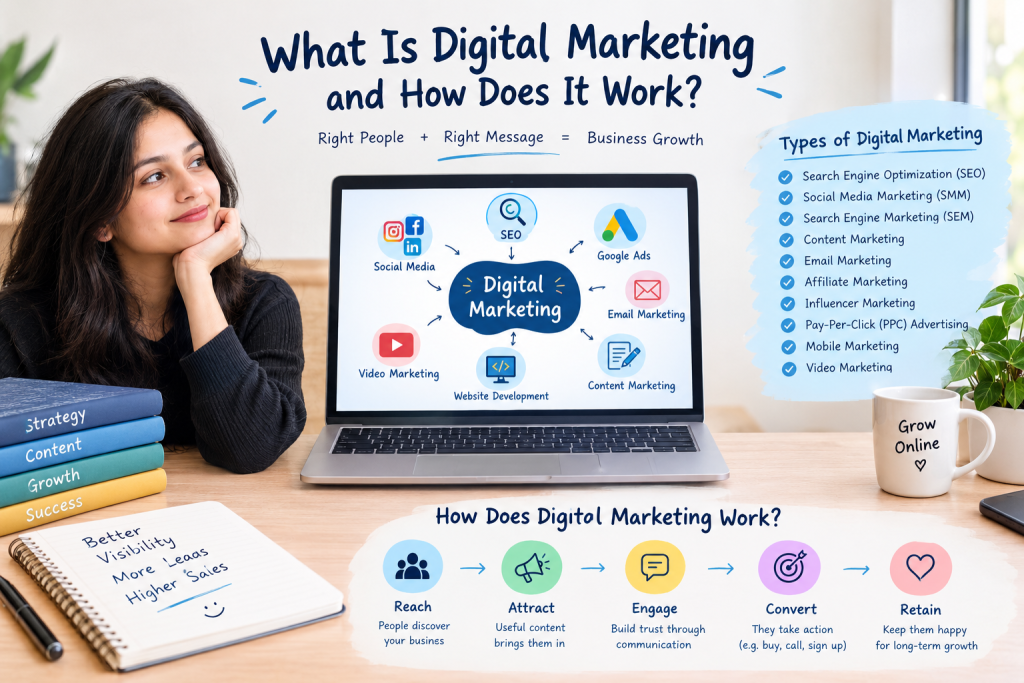
What is Digital Marketing? A Complete Beginner’s Guide (2026)

Introduction The world has moved online — and so has marketing. Whether you are a student trying to build a career, a small business owner looking to attract more customers, or an entrepreneur ready to launch your first product, understanding what is digital marketing has become one of the most valuable skills you can have in 2026. Digital marketing is how businesses promote their products and services using the internet and digital channels — from Google search results and Instagram feeds to email inboxes and YouTube videos. It is faster, more measurable, and far more cost-effective than traditional marketing methods. In this beginner’s guide, you will learn exactly what digital marketing is, why it matters, the seven main types every marketer should know, how to get started from scratch, and the biggest trends shaping the industry right now. Let’s dive in. What is Digital Marketing? In simple terms, it is any marketing activity that takes place online or through a digital device. If your business appears on Google, runs ads on Facebook, sends newsletters to subscribers, or posts videos on YouTube — that is digital marketing at work. Unlike traditional marketing, which relies on physical mediums like billboards, newspapers, and TV commercials, digital marketing gives businesses of every size the ability to reach a global audience, track every result in real time, and adjust their strategy on the fly. Traditional Marketing vs Digital Marketing Here is a quick side-by-side comparison to make the difference clear: The key shift is measurability and reach. Traditional marketing is broad and hard to track. Digital marketing is precise, data-driven, and scalable on almost any budget. Why is Digital Marketing Important in 2026? With over 5.4 billion internet users worldwide and the average person spending more than 6 hours online daily, digital marketing is no longer optional — it is essential. Here is why businesses and individuals are investing in it more than ever:•       Global reach: A small business in Lucknow can now reach customers in London, Dubai, or New York with a single well-placed ad or blog post.                •       Cost-effective marketing: Running a Google Ads campaign or                                       publishing a blog post costs a fraction of what a TV commercial or                                 newspaper ad would.               •       Better ROI: Because you can track every click, open, and conversion,                              digital marketing consistently delivers a higher return on investment                              than traditional channels.                •       Targeted audience: You can show your ads exclusively to people                                   aged 25–40, living in a specific city, interested in fitness — reaching                               the right person at the right time.                 •       Real-time performance tracking: Tools like Google Analytics and                                  Meta Ads Manager let you see exactly what is working and what is                                not, often within minutes.                •       Increased brand awareness: Consistent presence across search, social                           media, and email keeps your brand top of mind with potential                                       customers. Types of Digital Marketing There are seven core types of digital marketing, each serving a different purpose. A well-rounded strategy typically uses several of them together: 1. Search Engine Optimization (SEO):- SEO is the practice of optimizing your website so it ranks higher in Google’s organic (unpaid) search results. It involves keyword research, high-quality content creation, and technical improvements that help search engines understand and trust your site. SEO is the foundation of long-term, sustainable digital marketing growth. 2. Content Marketing:-Content marketing is about creating and distributing genuinely useful content — blog posts, videos, infographics, podcasts, and guides — that attracts and educates your target audience. It builds trust and authority over time, and is the engine that powers SEO, social media, and email marketing. 3. Social Media Marketing:- Social media marketing uses platforms like Instagram, Facebook, LinkedIn, YouTube, and X (formerly Twitter) to build brand awareness, engage with followers, and drive traffic to your website. It includes both organic content (regular posts and Reels) and paid social advertising. 4. Email Marketing:-Email marketing is one of the highest-ROI channels in digital marketing, with an average return of $36 for every $1 spent. It involves building a subscriber list and sending targeted, personalized messages — newsletters, promotions, welcome sequences, and follow-ups — to nurture leads and retain customers. 5. Pay-Per-Click Advertising (PPC):- PPC, most commonly associated with Google Ads, allows businesses to appear at the very top of search results by paying for each click their ad receives. It delivers immediate visibility and is ideal for product launches, seasonal campaigns, or any situation where you need traffic fast while SEO builds in the background. 6. Affiliate Marketing:- Affiliate marketing is a performance-based model where businesses reward partners (affiliates) with a commission for every sale or lead they generate. It is a low-risk way to scale reach, as you only pay when results are delivered. 7. Influencer Marketing:- Influencer marketing leverages the trust and reach of social media creators to promote your brand to their engaged audiences. Micro-influencers (1,000–50,000 followers) in particular offer excellent

wpChatIcon
wpChatIcon
Scroll to Top