Introduction
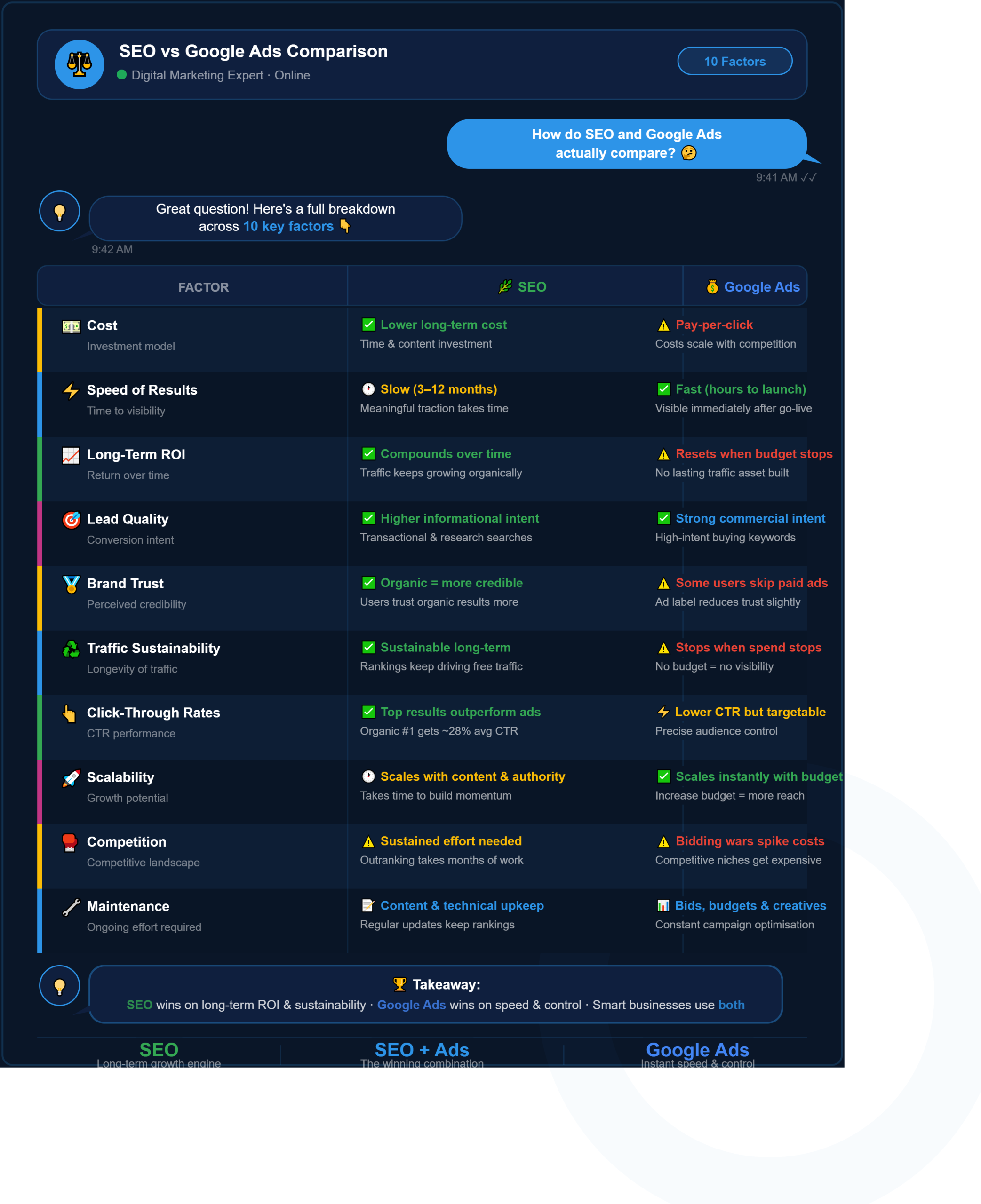
If you have ever sat down to plan a marketing budget and found yourself stuck choosing between Google Ads vs SEO, you are not alone. It is one of the most common dilemmas small business owners, startups, and marketers face when deciding where to put their next dollar.Both channels promise visibility on Google, but they work in fundamentally different ways. SEO (search engine optimization) builds organic, unpaid visibility over time. Google Ads buys immediate placement at the top of search results through a pay-per-click auction. Each has distinct costs, timelines, and risks, and the “right” answer depends heavily on your business stage, budget, and goals.In this guide, we will break down exactly how SEO and Google Ads work, compare them side by side across the metrics that matter most (cost, speed, ROI, lead quality, and more), and show you real-world scenarios for local businesses, e-commerce stores, service providers, and startups. We will also cover how SEO is evolving in 2026 with AI Overviews and Generative Engine Optimization (GEO), and why the smartest businesses do not choose one channel exclusively — they combine both for a complete digital marketing strategy.
What Is SEO?
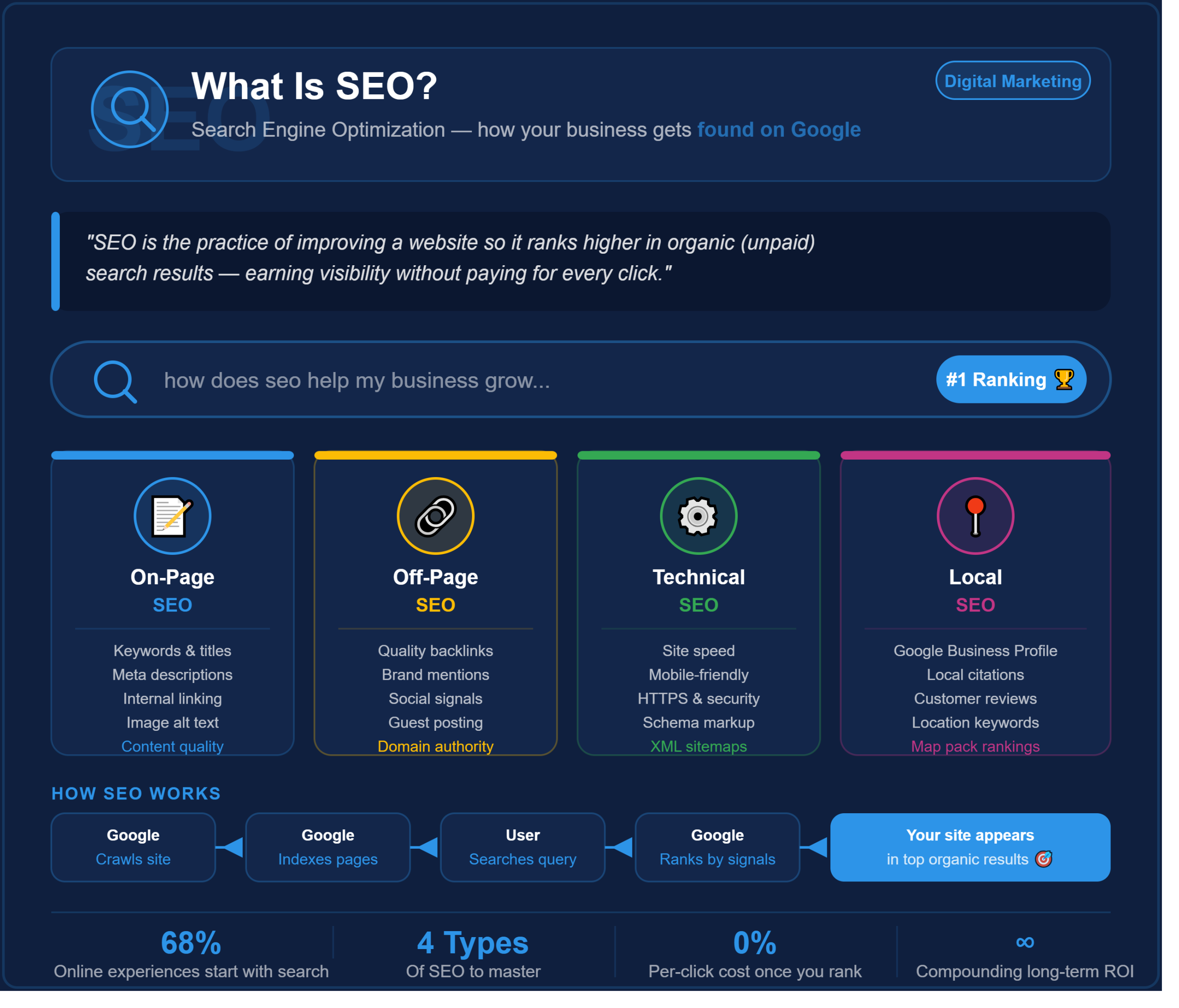
Search engine optimization (SEO) is the practice of improving a website so it ranks higher in organic (unpaid) search results. Rather than paying for clicks, SEO earns visibility by making a site more relevant, authoritative, and user-friendly than competing pages.
How SEO Works
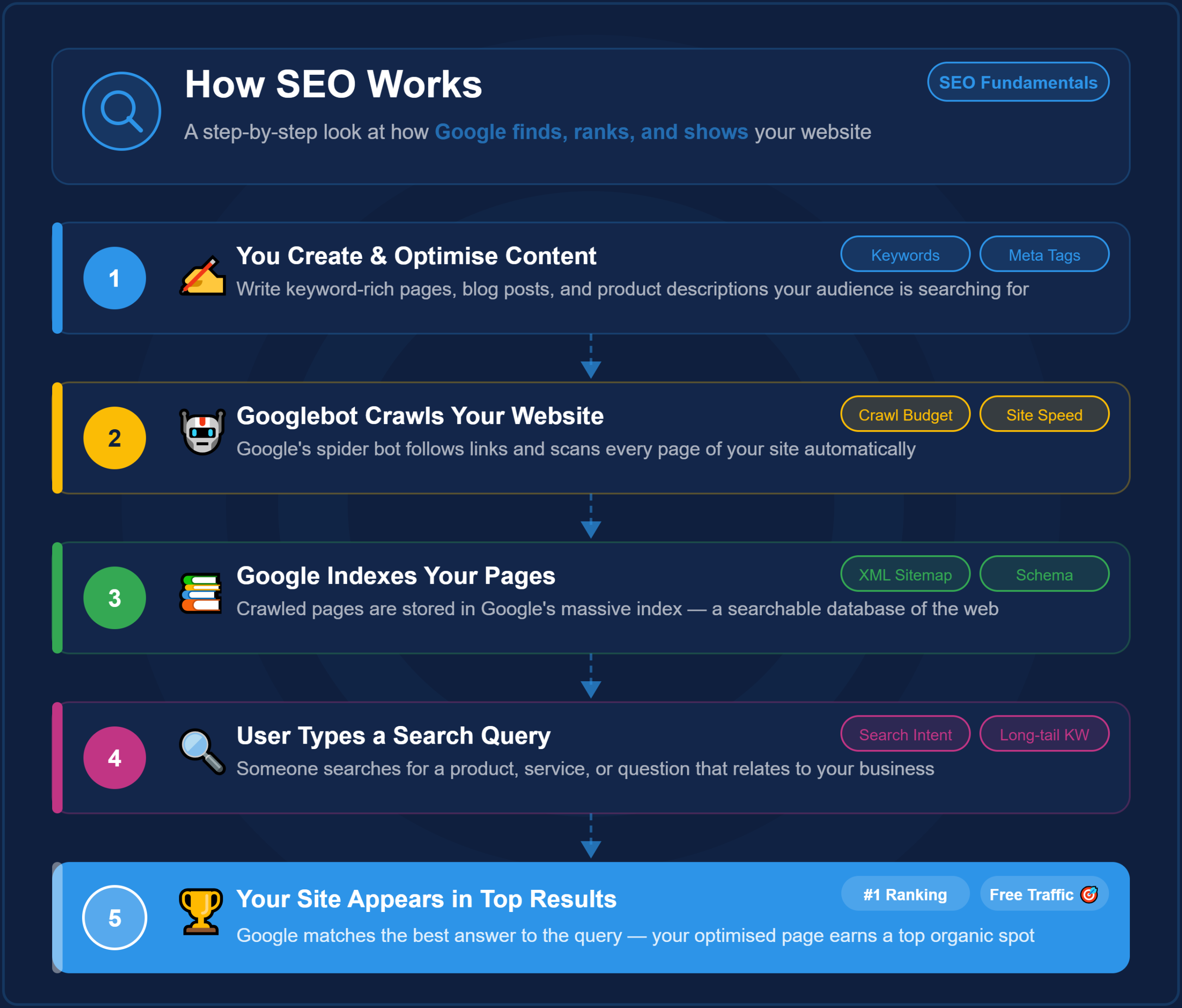
Search engines like Google crawl and index billions of pages, then rank them for each query based on hundreds of signals — relevance, content quality, site structure, backlinks, user experience, and more. SEO is the ongoing work of aligning your website with those signals so it surfaces for the searches your customers are already making.
On-Page SEO
On-page SEO covers everything you control directly on your website:
• Keyword-optimized titles, headings, and body content
• Meta titles and descriptions that improve click-through rate
• Internal linking that helps users and search engines navigate your site
• Image alt text and structured, scannable formatting
Off-Page SEO
Off-page SEO focuses on signals from outside your website that build authority and trust, most notably backlinks from other reputable sites, brand mentions, and social proof. Search engines treat quality backlinks as a vote of confidence in your content.
Technical SEO
Technical SEO ensures search engines can crawl, render, and index your site efficiently. This includes site speed, mobile-friendliness, secure HTTPS connections, clean URL structures, XML sitemaps, and structured data (schema markup) that helps your pages qualify for rich results and AI Overviews.
Local SEO
Local SEO helps businesses appear in location-based searches and Google Maps results. It relies on an optimized Google Business Profile, consistent business citations (name, address, phone number), local reviews, and location-specific content — critical for any business with a physical presence or service area.
Benefits of SEO
• Compounding returns: Content and rankings continue driving traffic long after they are published.
• Lower cost per acquisition over time: No per-click fees once you rank
.• Builds authority and trust: Organic rankings are often perceived as more credible than ads.
• Sustainable traffic: Traffic does not disappear the moment you pause spending.
Challenges of SEO
• Slow to show results: Meaningful ranking improvements typically take months.
• Requires consistent effort: Content, technical upkeep, and link building are ongoing.
• Algorithm changes: Google updates can shift rankings unexpectedly.
• High competition for top keywords: Established competitors can be hard to outrank quickly.
What Are Google Ads?
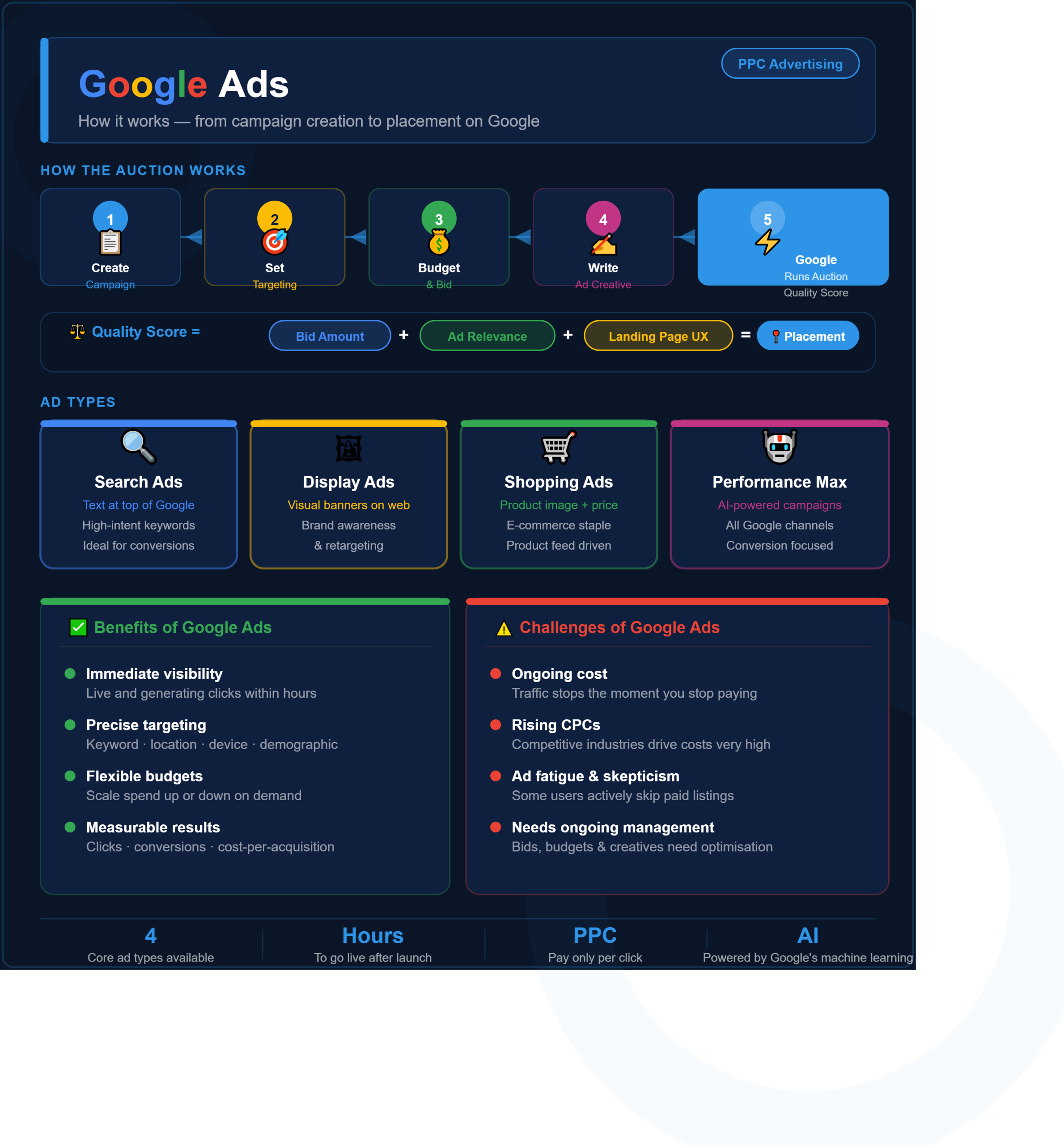
Advertisers create campaigns, choose targeting (keywords, audiences, locations), set a budget and bid strategy, and write ad creative. Google runs an instant auction for each relevant search or impression, weighing bid amount alongside ad quality and relevance (Quality Score) to determine placement.
Google Ads vs SEO: Side-by-Side Comparison