Building Powerful Websites for Digital Growth
What is Website Developer ?
A Website Developer is a professional who creates, designs, and maintains websites to ensure they function smoothly and provide a great user experience. Website developers use programming languages, design tools, and modern technologies to build responsive, fast, and user-friendly websites for businesses, brands, and individuals. Their work includes developing website layouts, adding features and functionality, optimizing website performance, ensuring mobile compatibility, and improving security. Website developers may specialize in front-end development, which focuses on the visual appearance of a website, or back-end development, which manages servers, databases, and technical operations. They play an important role in building strong online presence, improving user engagement, and helping businesses grow digitally through professional and effective website solutions.

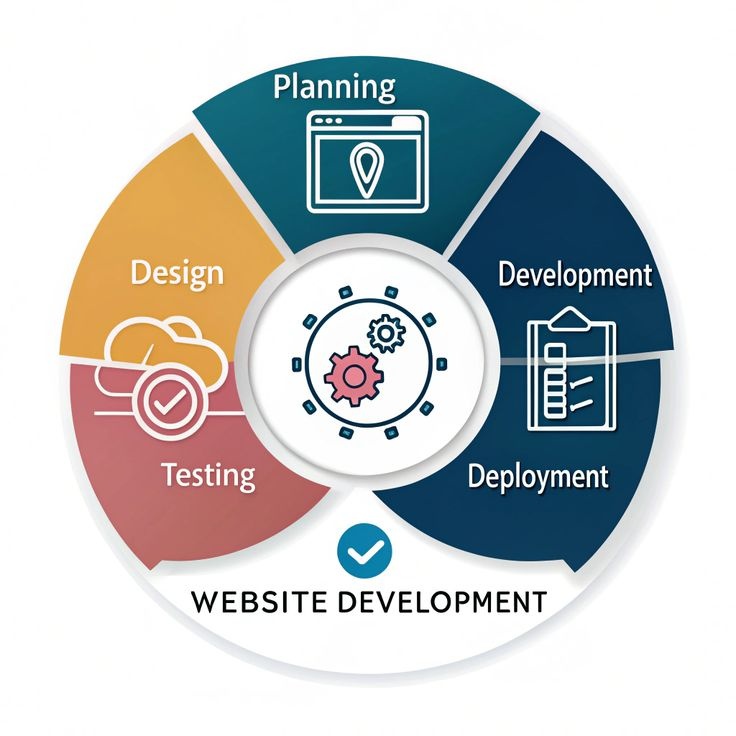
Website Development Process (Roadmap)
What is Domain ?
A domain is the unique web address people use to visit your website, such as example.com. It acts like your website’s digital address, making it easy for users to find your online presence without remembering complex IP addresses. Domains are essential for creating a professional identity, improving brand recognition, and building trust online. They usually include extensions like .com, .org, .net, or country-specific endings such as .in for India. Domains are registered through domain registrars and are renewed periodically rather than permanently owned. Choosing the right domain name is important because it supports branding, SEO, credibility, and online visibility. A memorable and relevant domain helps customers easily recognize, remember, and access your business online, making it a key part of building a strong digital presence and professional website identity.
Types of Domains:
Generic Top-Level Domains (gTLDs)
Country Code Domains (ccTLDs)
Subdomains

What is Hosting ?
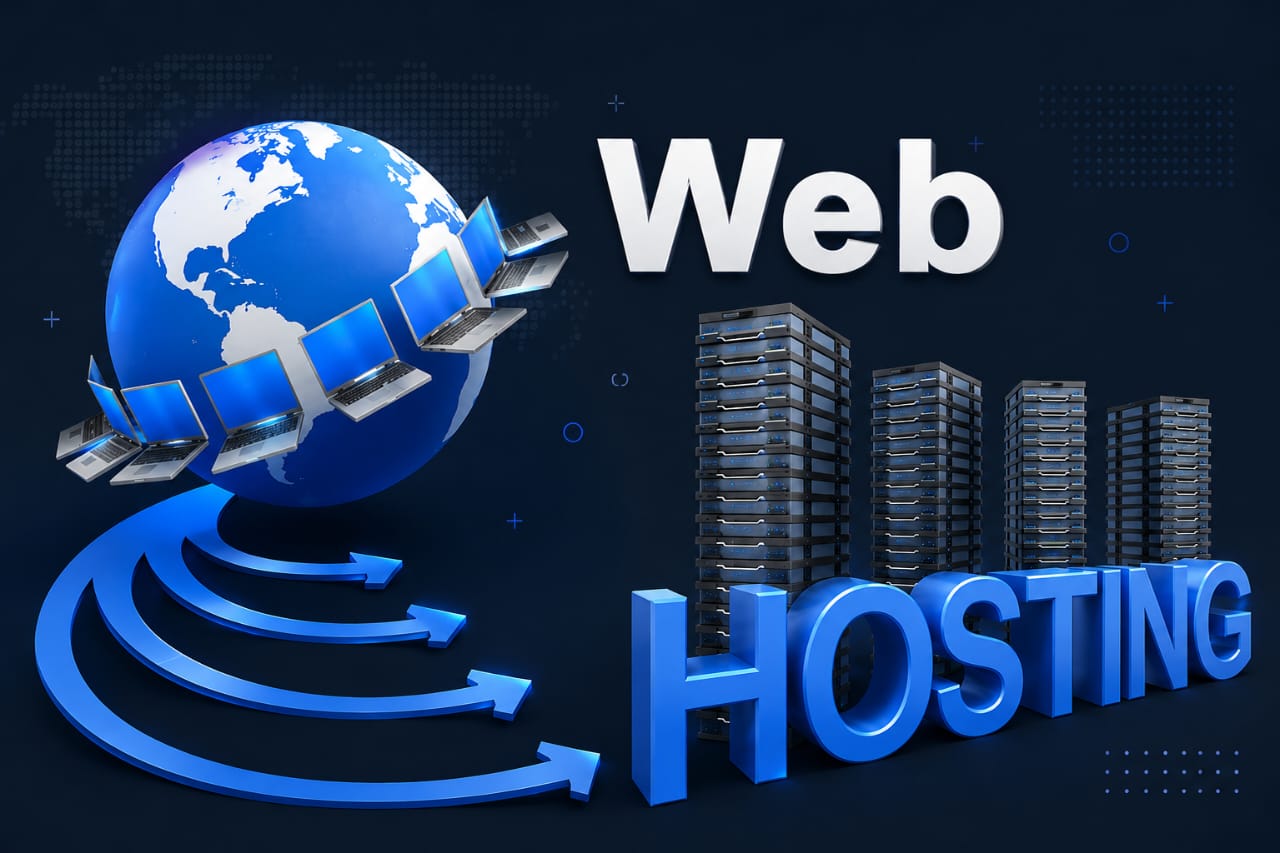
Web hosting is a service that stores your website’s files and makes your website accessible on the internet. When a website is created, all its content such as images, text, videos, and code needs a secure place to be stored, which is provided by a hosting server. When users enter your domain name in a browser, the hosting server delivers the website content to their device online. Web hosting plays an important role in website performance, speed, security, and reliability. There are different types of hosting services, including shared hosting, VPS hosting, cloud hosting, and dedicated hosting, each offering different levels of storage, control, and performance. A good web hosting service ensures your website loads quickly, remains secure, and stays available to visitors at all times. Reliable hosting helps improve user experience, supports business growth, and maintains a strong and professional online presence for websites and brands.
Shared Hosting, VPS Hosting, Dedicated Hosting, Cloud Hosting,
Managed Hosting
A Complete Guide to Web Hosting Types
Shared Hosting
Shared hosting is a type of web hosting where multiple websites share the same server and its resources, making it a budget-friendly and beginner-friendly option. It is best suited for small websites, blogs, portfolios, and startups with low traffic and basic hosting needs. Since resources are shared, high traffic on one website may affect the performance of others on the same server. However, shared hosting remains a simple and cost-effective solution for websites that do not require advanced features or high storage capacity.
VPS Hosting
VPS (Virtual Private Server) hosting divides one physical server into multiple virtual servers, giving each website its own dedicated resources and private space. It offers better speed, security, performance, and control compared to shared hosting. VPS hosting is ideal for growing websites and businesses that need more flexibility and reliability without investing in the higher cost of a dedicated server. It also allows users to customize server settings according to their website requirements. This hosting type is suitable for websites with moderate to high traffic that require stable performance and improved scalability.
Dedicated Hosting
Dedicated hosting provides a single website with complete access to an entire physical server, ensuring high speed, strong security, reliable performance, and advanced customization. Since resources are not shared, it is ideal for large businesses and high-traffic websites that need stable performance and full server control. However, dedicated hosting is more expensive and usually requires technical knowledge for effective management and maintenance.
Cloud Hosting
Cloud hosting uses multiple connected servers to host websites, providing high reliability, flexibility, and scalability. If one server experiences issues, another server immediately takes over to keep the website running smoothly. It allows businesses to use resources based on their needs and pay only for what they use. Cloud hosting is ideal for growing businesses, e-commerce websites, and applications that require strong performance, stable uptime, and the ability to handle changing traffic levels efficiently.

Managed Hosting
Managed hosting is a hosting service where the provider handles all technical tasks such as server setup, updates, security, backups, and maintenance. This allows website owners to focus on their business, content, and growth without worrying about server management. Managed hosting is ideal for WordPress websites, business websites, and high-traffic platforms that require reliable performance, security, and professional technical support.
What Is Subdomain?

A subdomain is an extension of a main domain that helps organize different sections of a website under the same primary domain name. It appears before the main domain, such as blog.example.com or store.example.com. Businesses use subdomains to create separate areas for blogs, online stores, customer support, or specific services while keeping everything connected to the main website. Subdomains help improve website organization, navigation, and user experience. They can also be managed independently with different content or designs, making them useful for large websites, multilingual platforms, and businesses that want to separate functions without purchasing a new domain name entirely.
Types Of Website
Static Website
Dynamic Website
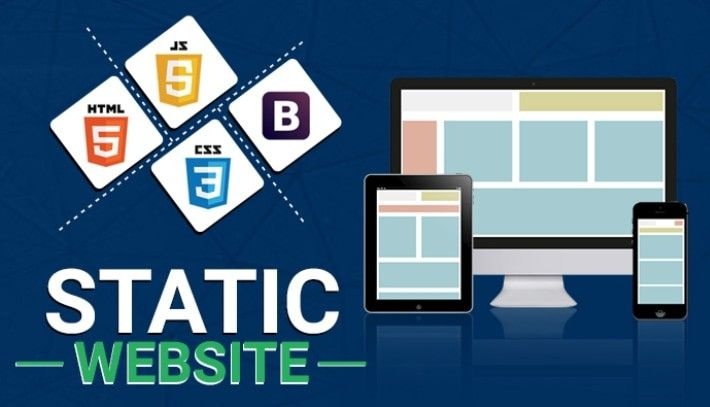

A static website is a type of website where the content remains the same for every visitor unless manually updated by the developer. These websites are usually built using HTML, CSS, and sometimes JavaScript, making them simple, fast, and secure. Static websites load quickly because they do not rely on databases or complex server processing. They are ideal for small businesses, portfolios, personal websites, and informational pages that do not require frequent updates or advanced functionality. Since the content is fixed, static websites are easy to maintain and cost-effective to host. However, they offer limited interactive features and do not support dynamic functions like user logins, real-time updates, or personalized content. Overall, static websites provide a reliable and efficient solution for displaying stable and straightforward online content.
A dynamic website is a type of website that automatically changes and updates content based on user activity, preferences, or stored data. Unlike static websites, dynamic websites use databases, server-side scripting, and content management systems (CMS) to display different content to different users in real time. Websites like e-commerce stores, social media platforms, blogs, and online portals commonly use dynamic functionality to manage products, user profiles, comments, and updates efficiently. Dynamic websites are built using technologies such as PHP, JavaScript, Python, and databases to manage content smoothly. They are ideal for businesses that require frequent updates, user interaction, online transactions, or personalized experiences. Although they require more development and hosting resources, dynamic websites provide greater flexibility, advanced functionality, and a better user experience.
Categories of Website Developers
Front-End Developer
Front-end development focuses on creating the visual elements, layout, and interactive features of a website that users see and engage with. The primary technologies used are HTML and CSS.
E-commerce Website
We develop fully featured online stores with secure payment processing, optimized product pages, and everything customers need for a seamless shopping experience.
Back-End Developer
Back-end development powers the behind-the-scenes functionality of a website, ensuring that everything operates smoothly and efficiently. It involves managing servers, databases, APIs, and application logic that handle data processing, user authentication, and system operations. By maintaining the core infrastructure of a website, back-end developers ensure secure, reliable, and seamless performance for users.

Full-Stack Developer
Full-stack developers are skilled in both front-end and back-end development, enabling them to manage the entire website development process from start to finish. They handle everything from designing user interfaces and creating interactive features to managing servers, databases, and application logic. Their comprehensive expertise ensures that websites are visually appealing, fully functional, and deliver a seamless user experience.
Web Designer
UI/UX designers create the overall look and feel of a website, including layouts, color schemes, and visual elements. They ensure every page aligns with the brand identity while delivering a seamless user experience. Their goal is to design websites that are visually appealing, consistent, and easy to navigate.
WordPress Developer
WordPress developers build, customize, and maintain websites using WordPress, leveraging a wide range of themes, plugins, and tools. They create user-friendly, responsive websites tailored to specific business needs and ensure seamless functionality. Their expertise helps businesses manage and scale their online presence efficiently.
Tools for Website Development



Patient Information
FAQ..
We offer complete website development services, including business websites, e-commerce websites, portfolio websites, landing pages, WordPress websites, and custom web solutions tailored to your business needs.
Yes. Every website we build is fully responsive and works smoothly on desktops, tablets, and mobile devices.
The development time depends on the project’s size and complexity. A standard business website typically takes 1–3 weeks, while larger or custom websites may take longer.
Absolutely. We can redesign your existing website with a modern layout, improved user experience, faster performance, and better functionality.
Simply contact us through our website or fill out our inquiry form. We’ll discuss your requirements, understand your goals, and provide a customized website development plan.
Hi, I’m Diksha, founder of Digidiksha.
I started Digidiksha to help businesses grow through creative, authentic, and result-driven digital marketing. We create smart strategies that connect brands with the right audience, build a strong online presence, and drive long-term growth. By combining creativity, strategy, and data, we turn ideas into meaningful digital success.
Contact
dikshashukla2225@gmail.com
8874099105
Patrika Chauraha, prayagraj
© 2023 Created with Digidiksha.info
