

Here's a number that should make every business owner pay attention: nearly 60% of all Google searches in 2026 now end without anyone clicking a single link. Not because people couldn't find what they needed — but because Google's AI answered the question right there on the results page, and the user never needed to go anywhere else.
For the past two decades, the game of SEO has been relatively consistent. You ranked for keywords, people clicked your link, they came to your website, and hopefully they became customers. It was a predictable system. You could optimise for it.
That system still exists — but it's no longer the whole game. Alongside it, an entirely new search ecosystem has emerged, powered by AI. Google AI Overviews. ChatGPT Search. Perplexity. Microsoft Copilot. These tools are fundamentally changing how people find information, evaluate businesses, and make purchase decisions.
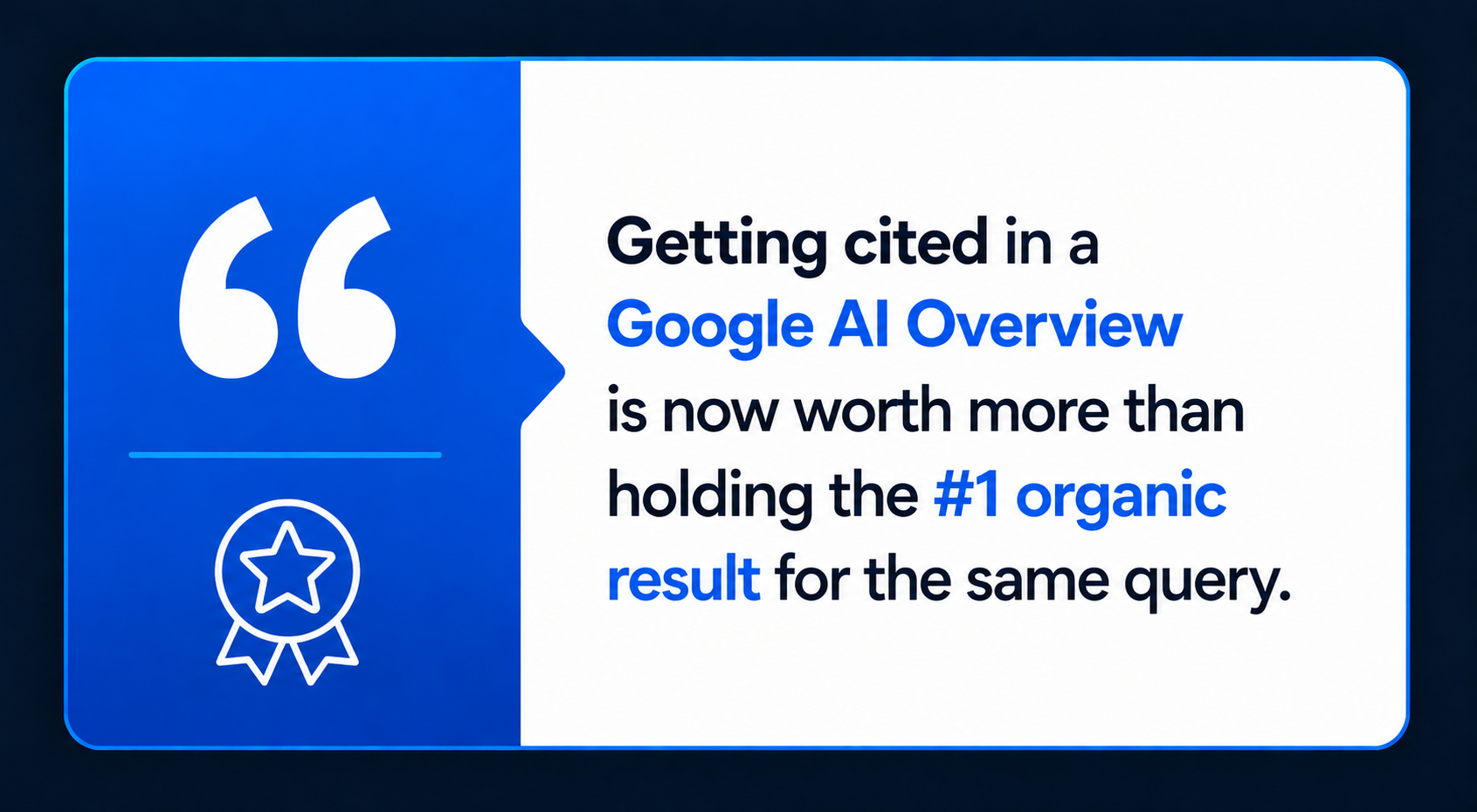
The businesses that understand this shift are quietly building enormous competitive advantages right now. The ones that don't are watching their organic traffic erode — and wondering why their old strategy isn't working anymore.
This article explains exactly what has changed, why it matters, and — most importantly — what you can do about it today. No jargon overload. No panic. Just clarity.
The New Search Reality: What the Data Actually Shows
Before we talk strategy, let's look at the scale of what's happening. Because the numbers are genuinely striking — and they're the foundation of everything else in this article.
2BMonthly users now engage with Google AI Overviews globally — making it the fastest-adopted search feature in Google's history. For businesses, this means AI-generated answers are no longer an experiment; they're the mainstream search experience.Source: SEOmator AI SEO Statistics, 2026agraph here
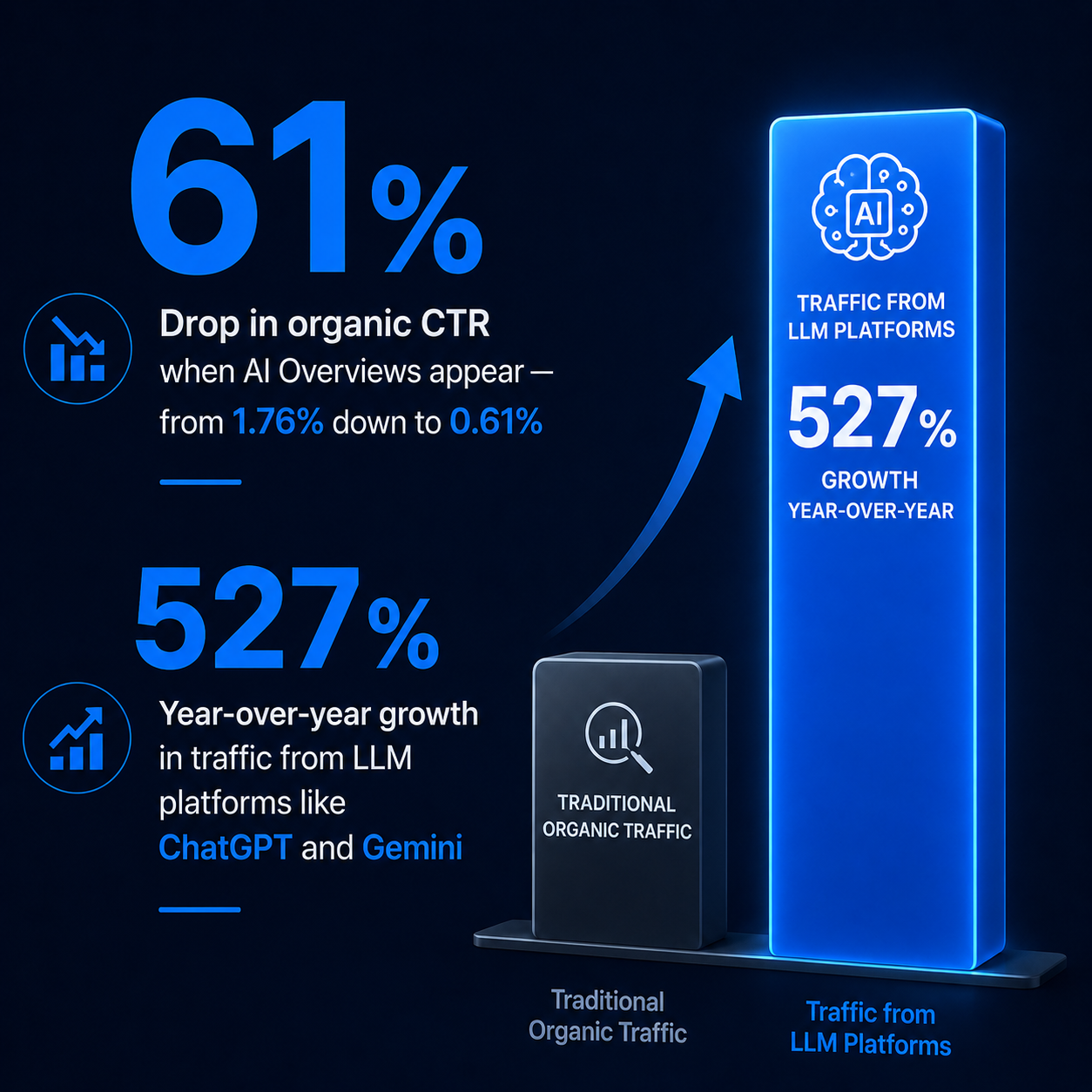
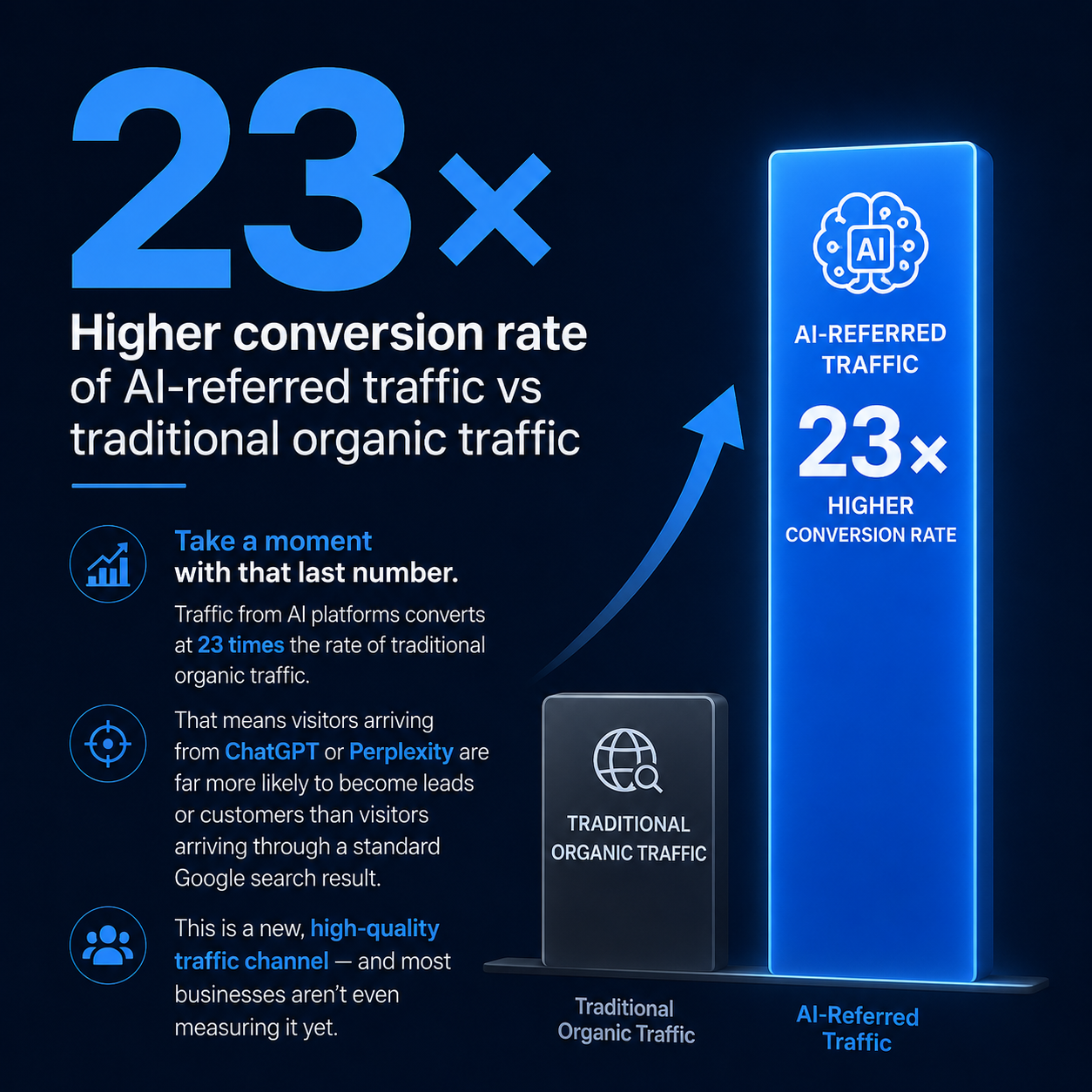
Here's the story in plain language: AI has made it easier to find answers but harder to earn clicks. The brands that learn to earn citations in AI answers — not just rankings in traditional results — will win the next decade of search.
The Five Biggest SEO Shifts Driven by AI
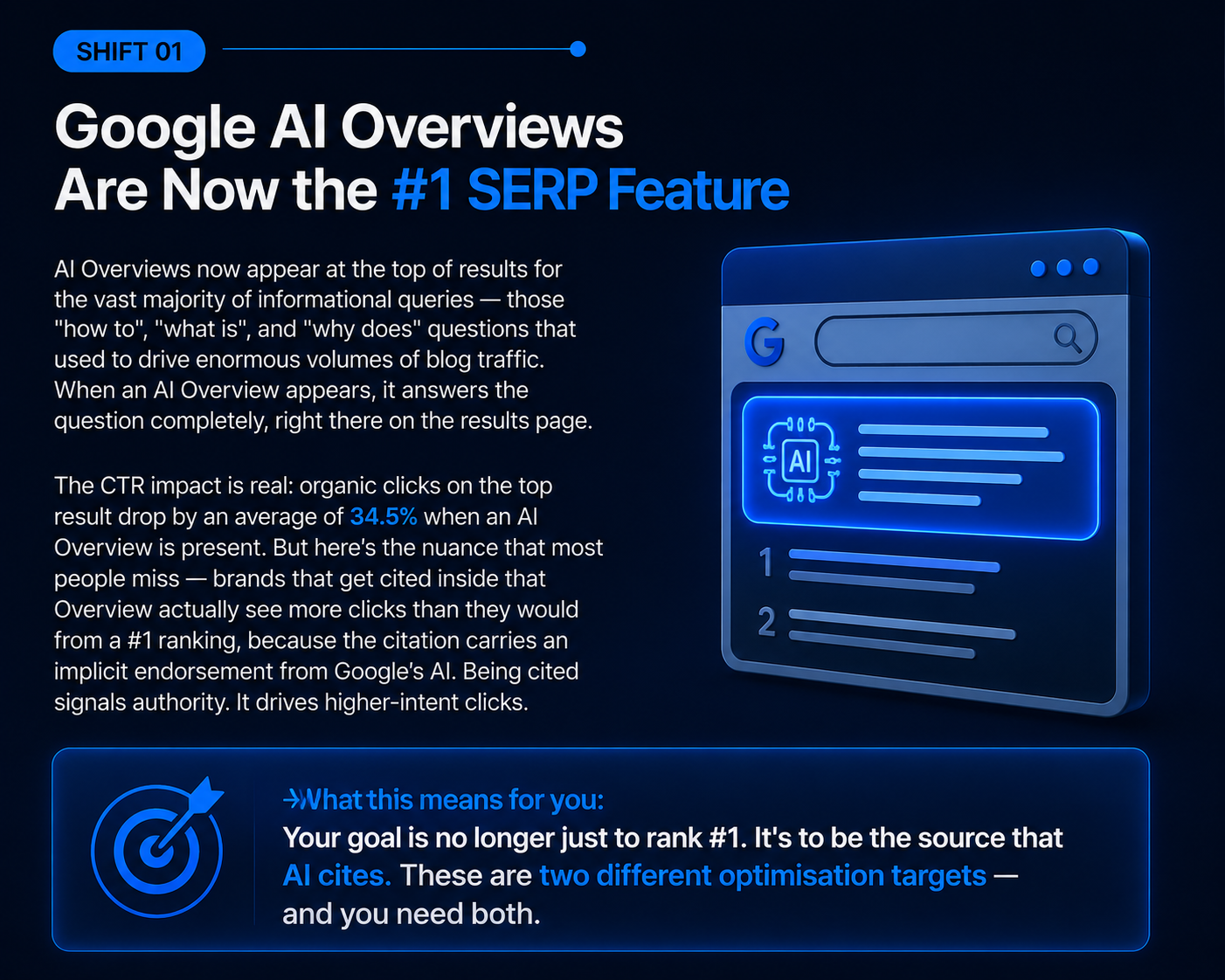
This isn't one change — it's five interconnected ones happening simultaneously. Understanding each of them separately is what allows you to build a coherent strategy in response.
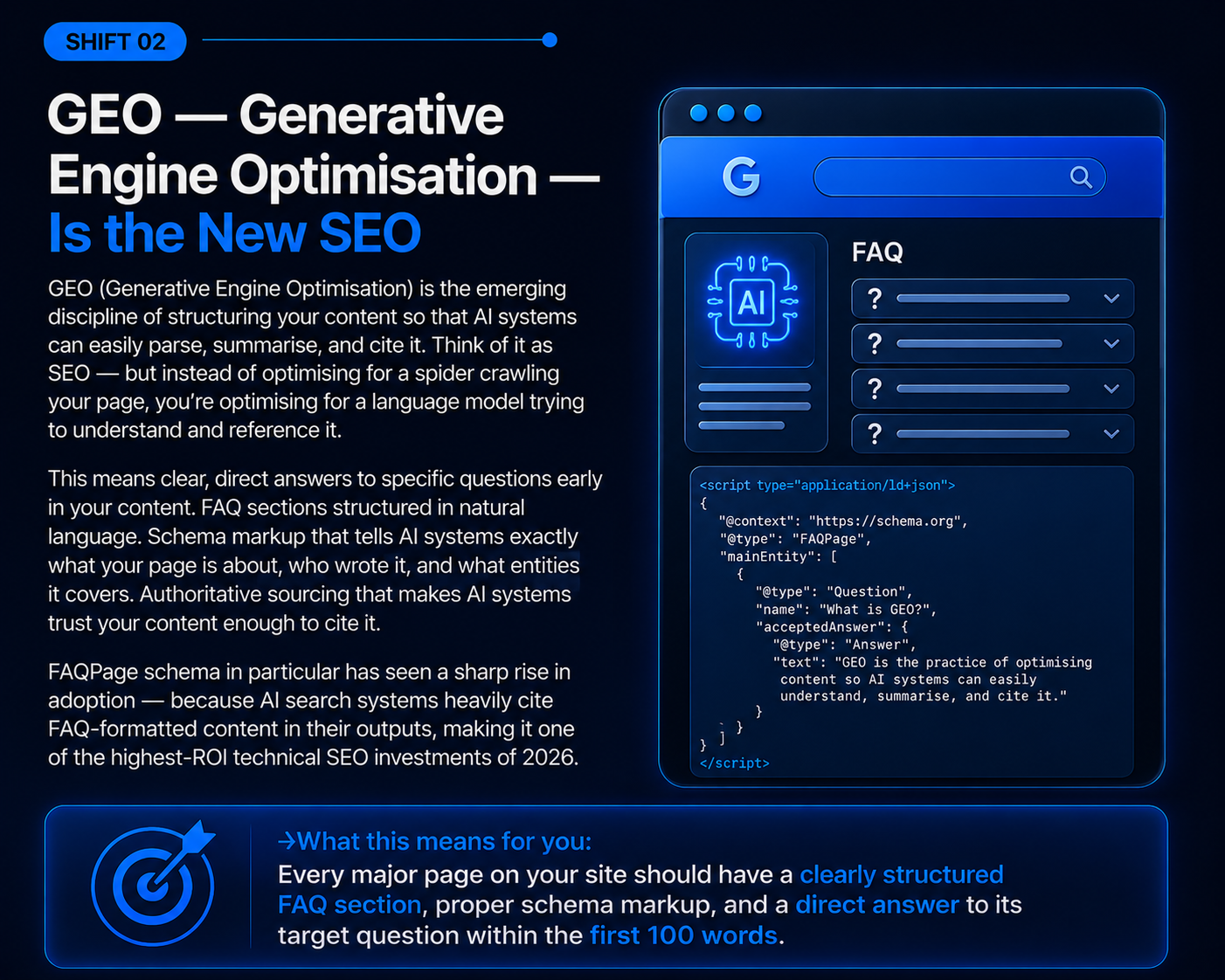
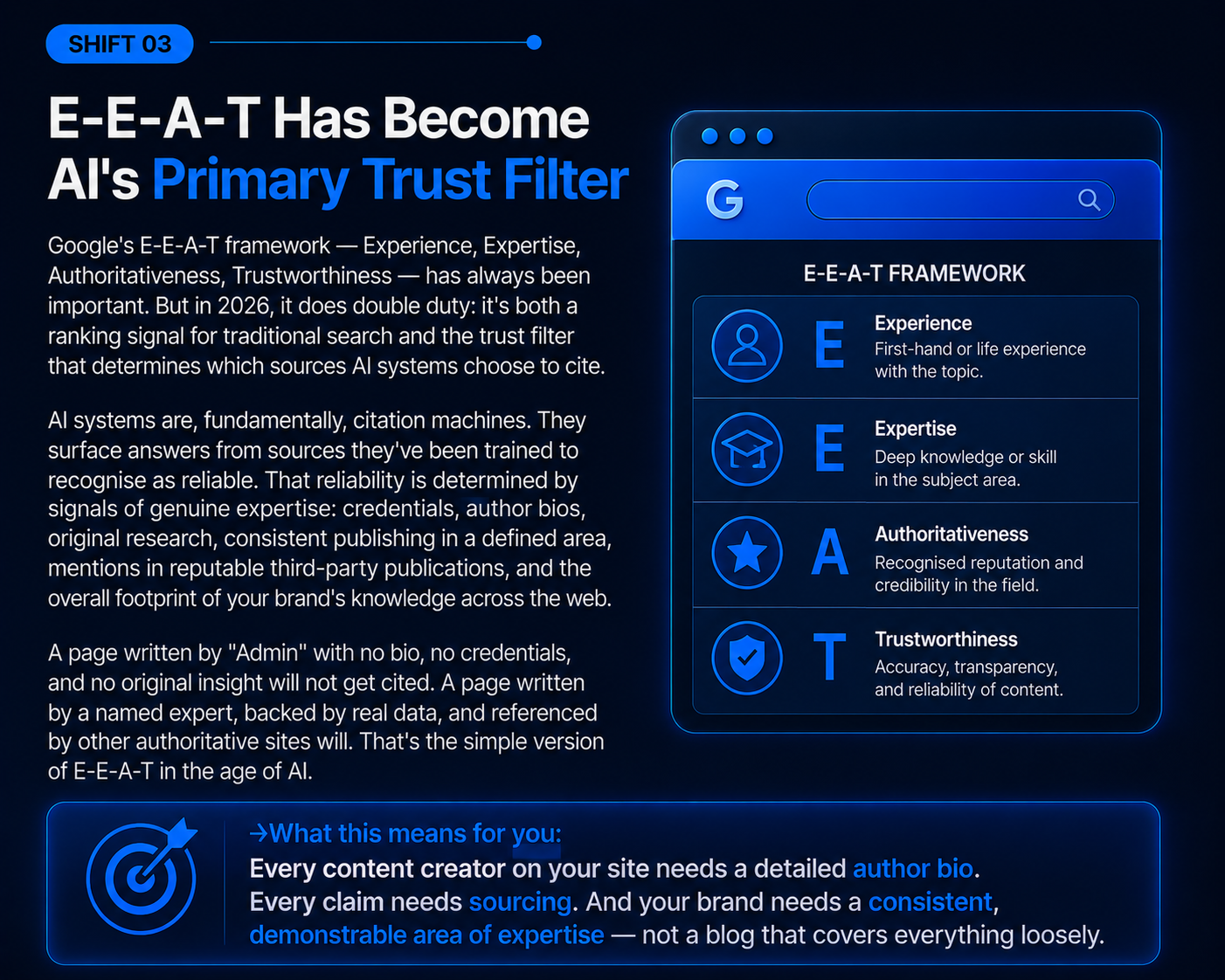
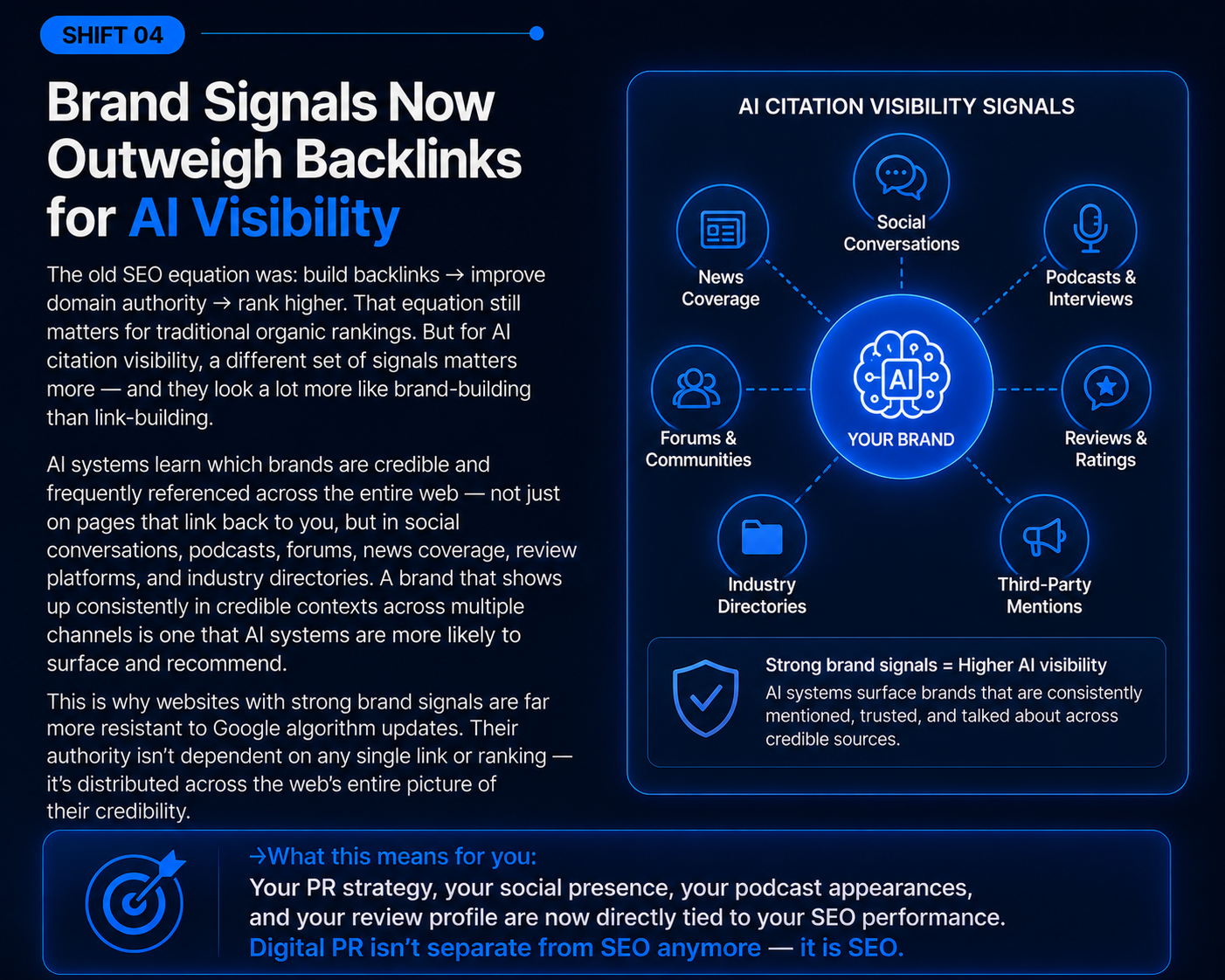
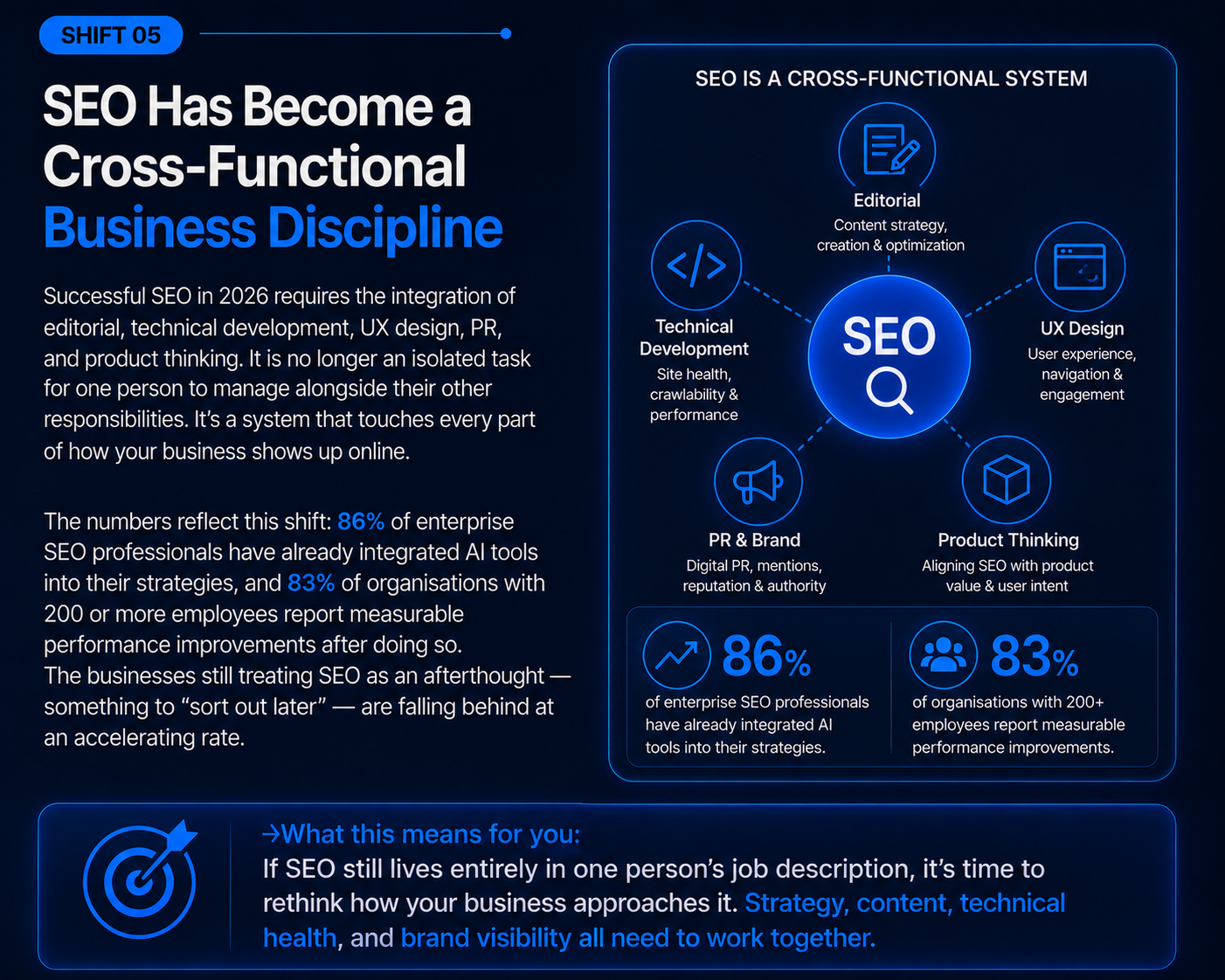
What AI Means for Your Content Strategy
All five of these shifts point to the same conclusion for your content: AI rewards depth, structure, and specificity — not volume, keyword stuffing, or surface-level takes on trending topics.
The content that AI systems are trained to cite is content that does one thing exceptionally well: it answers a specific question completely, in one place, without making the reader go anywhere else. It's authoritative enough to trust. It's structured clearly enough to parse. It's written by someone with demonstrable expertise. And it's backed by real data or genuine experience.
AI-driven SEO can boost organic traffic by 45% and e-commerce conversion rates by 38% — but only for businesses that have moved past experimentation and implemented a structured, deliberate strategy. That gap between knowing this and actually doing it is where most businesses currently sit.
Content Quality Checklist — Before You PublishRun every major piece of content through these five questions before it goes live:
1.Does this piece answer its target question directly and completely within the first 100 words?
2.Are there clear H2/H3 subheadings phrased as natural-language questions a person would actually ask?
3.Is there a structured FAQ section at the bottom covering related questions?
4.Are all major claims backed by a cited source, real data, or documented first-hand experience?
5.Is there an author bio that establishes genuine credentials and expertise in this topic area?
How Keywords Have Changed — and What to Target Now
The keyword strategy that worked in 2022 — find high-volume terms, build pages around them, earn rankings — is only part of the picture now. Here's how keyword targeting has evolved:
Short-tail informational keywords (e.g. "what is SEO", "how does email marketing work") have largely been absorbed by AI Overviews and zero-click answers. Google answers them directly. Trying to rank for these with thin explainer posts is a diminishing-return strategy.
