
Introduction
In this complete guide to social media marketing tips for small businesses, you will learn exactly what social media marketing is, why it matters, nine key benefits, fifteen actionable strategies with step-by-step implementation, a platform comparison, common mistakes to avoid, the top trends shaping 2026, and the best tools to make your efforts more efficient and effective. Let us get started.
Social media marketing is no longer optional for small businesses — it is one of the most powerful and cost-effective tools available to build a brand, connect with customers, and grow revenue in 2026. With over 5.4 billion active social media users worldwide, platforms like Instagram, Facebook, LinkedIn, and TikTok have become the primary places where people discover new brands, research products, and make purchase decisions.
For small businesses, social media offers something that traditional advertising never could: the ability to compete directly with larger brands on a fraction of the budget. A well-executed social media strategy builds brand awareness, generates leads, drives website traffic, and creates the kind of genuine customer relationships that turn first-time buyers into loyal advocates.
What is Social Media Marketing?
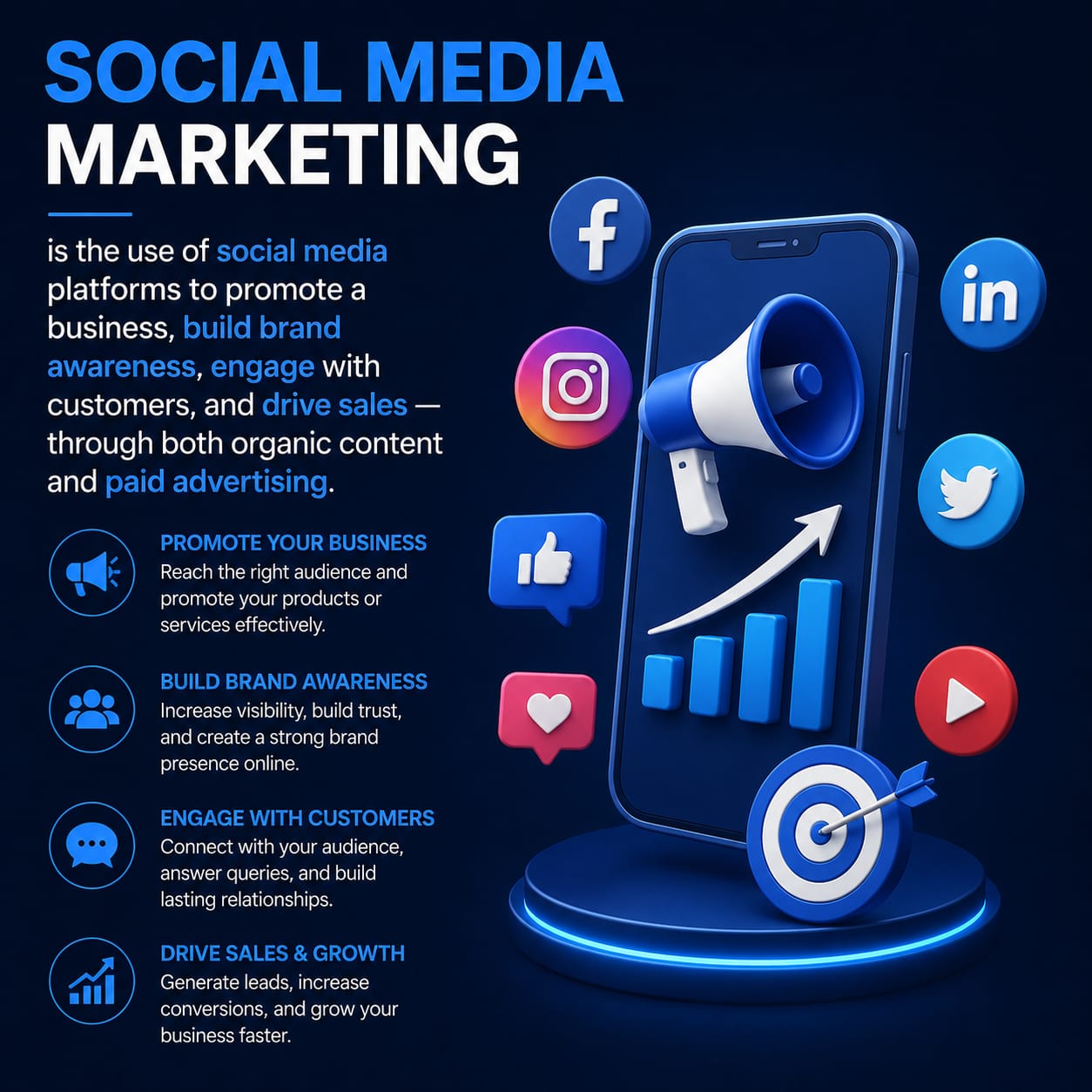
In simple terms, it is any marketing activity your business does on platforms like Instagram, Facebook, LinkedIn, YouTube, TikTok, Pinterest, or X (formerly Twitter). This includes posting photos and videos, responding to comments, running ad campaigns, sharing blog articles, collaborating with influencers, and using analytics to refine your approach.
Organic vs Paid Social Media Marketing
• Organic social media marketing involves creating and posting content without paying for distribution. Your reach depends on your follower base, content quality, and platform algorithms. It is ideal for building long-term brand authority and community.
• Paid social media marketing involves spending money to show your content to a targeted audience beyond your existing followers. Platforms like Facebook Ads and Instagram Ads allow highly precise targeting by location, age, interests, and behavior.
The most effective small business social media strategies combine both — organic content builds trust and community while paid advertising drives immediate reach and conversions.
Why Every Small Business Should Use Social Media
• It levels the playing field — a small local business can reach thousands of people with great content
• It is where your customers already spend their time every single day
• It builds brand personality, trust, and loyalty over time
• It offers measurable, trackable results unlike traditional advertising
• It drives both online sales and offline foot traffic for local businesses
Benefits of Social Media Marketing for Small Businesses
• Brand Awareness: Consistent posting and engagement exposes your brand to new audiences regularly. A local bakery that posts daily Stories of its products quickly becomes the go-to name in its neighborhood.
• Increased Website Traffic: Every post, bio link, and Story link sticker is an opportunity to send followers to your website, product pages, or blog.
• Lead Generation: Instagram Lead Ads, Facebook forms, and LinkedIn outreach allow businesses to collect qualified leads directly inside the platform.
• Customer Engagement: Polls, Q&As, comments, and DMs create two-way conversations that build genuine relationships between your brand and your customers.
• Cost-Effective Marketing: Organic social media is essentially free, and even paid ads can be launched with budgets as low as $5–$10 per day, making it accessible for any small business.
• Better Customer Relationships: Responding to comments and messages personally shows customers that a real person is behind the brand, building trust and loyalty.
• Higher Conversion Rates: Instagram Shopping tags and Facebook Shops allow customers to purchase directly from posts, reducing friction between discovery and purchase.
• Improved Brand Trust: A consistent, professional, and active social media presence signals credibility to potential customers who are researching before they buy.
• Measurable Results: Every platform provides analytics showing exactly how many people saw your content, clicked your links, or purchased from your store — allowing continuous data-driven improvement.
Top 15 Social Media Marketing Tips for Small Businesses
These fifteen strategies form the foundation of a complete social media marketing approach. Implement them consistently and you will see measurable growth in reach, engagement, and sales.
Tip #1: Set Clear Marketing Goals
Why it matters: Without clear goals, your social media activity becomes random and unmeasurable. Goals give your content strategy direction and allow you to measure what is actually working.
How to implement it: Define SMART goals (Specific, Measurable, Achievable, Relevant, Time-bound). Examples include: gain 500 new Instagram followers in 90 days; generate 50 leads per month from LinkedIn; drive 1,000 website visits per month from Facebook.
Example: A local gym sets a goal to increase class bookings by 30% over three months using Instagram Reels showcasing real member workouts.
Pro tip: Review your goals monthly and adjust your content strategy based on which platforms and formats are actually moving the numbers.
Tip #2: Understand Your Target Audience
Why it matters: Creating content without knowing your audience is like speaking to an empty room. Deep audience understanding is what makes every post relevant, engaging, and worth the viewer's time.
How to implement it: Build a detailed buyer persona including age range, location, interests, pain points, preferred platforms, and peak online hours. Use Instagram Insights, Facebook Audience Insights, and Google Analytics to confirm your assumptions with real data.
Example: A skincare brand discovers through Insights that 80% of its engaged audience is women aged 25-34 who follow wellness accounts, prompting a shift to clean beauty educational content.
Pro tip: Survey your existing customers directly using Instagram Story polls or a simple email questionnaire. Real customers give you the most accurate audience data available.
Tip #3: Choose the Right Social Media Platforms
Why it matters: Being everywhere at once dilutes your effort and quality. Focus on the one or two platforms where your ideal customers are most active and where your content format naturally fits.
How to implement it: Match your business type to the right platform: Instagram for visual product businesses, LinkedIn for B2B services, Facebook for local community businesses, TikTok for brands targeting younger audiences, Pinterest for home, fashion, or DIY brands.
Example: A B2B accounting firm gets far stronger results from 3 weekly LinkedIn posts than from daily Instagram content, because its clients are actively on LinkedIn looking for professional services.
Pro tip: Start with one platform, master it completely, then expand to a second once your first is producing consistent results.
