Introduction
The world has moved online — and so has marketing. Whether you are a student trying to build a career, a small business owner looking to attract more customers, or an entrepreneur ready to launch your first product, understanding what is digital marketing has become one of the most valuable skills you can have in 2026.
Digital marketing is how businesses promote their products and services using the internet and digital channels — from Google search results and Instagram feeds to email inboxes and YouTube videos. It is faster, more measurable, and far more cost-effective than traditional marketing methods.
In this beginner's guide, you will learn exactly what digital marketing is, why it matters, the seven main types every marketer should know, how to get started from scratch, and the biggest trends shaping the industry right now. Let's dive in.
What is Digital Marketing?
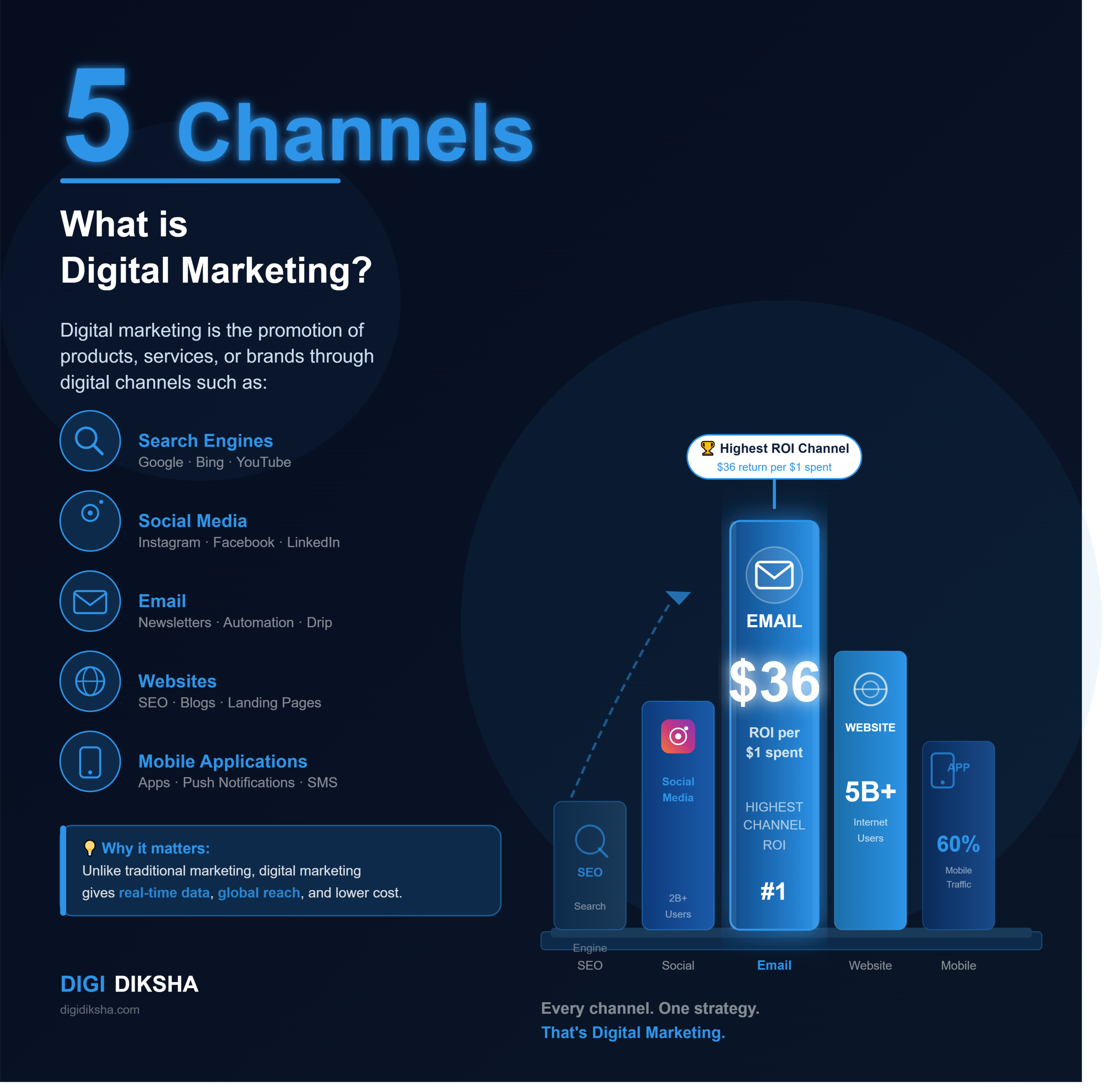
In simple terms, it is any marketing activity that takes place online or through a digital device. If your business appears on Google, runs ads on Facebook, sends newsletters to subscribers, or posts videos on YouTube — that is digital marketing at work.
Unlike traditional marketing, which relies on physical mediums like billboards, newspapers, and TV commercials, digital marketing gives businesses of every size the ability to reach a global audience, track every result in real time, and adjust their strategy on the fly.
Traditional Marketing vs Digital Marketing
Here is a quick side-by-side comparison to make the difference clear:
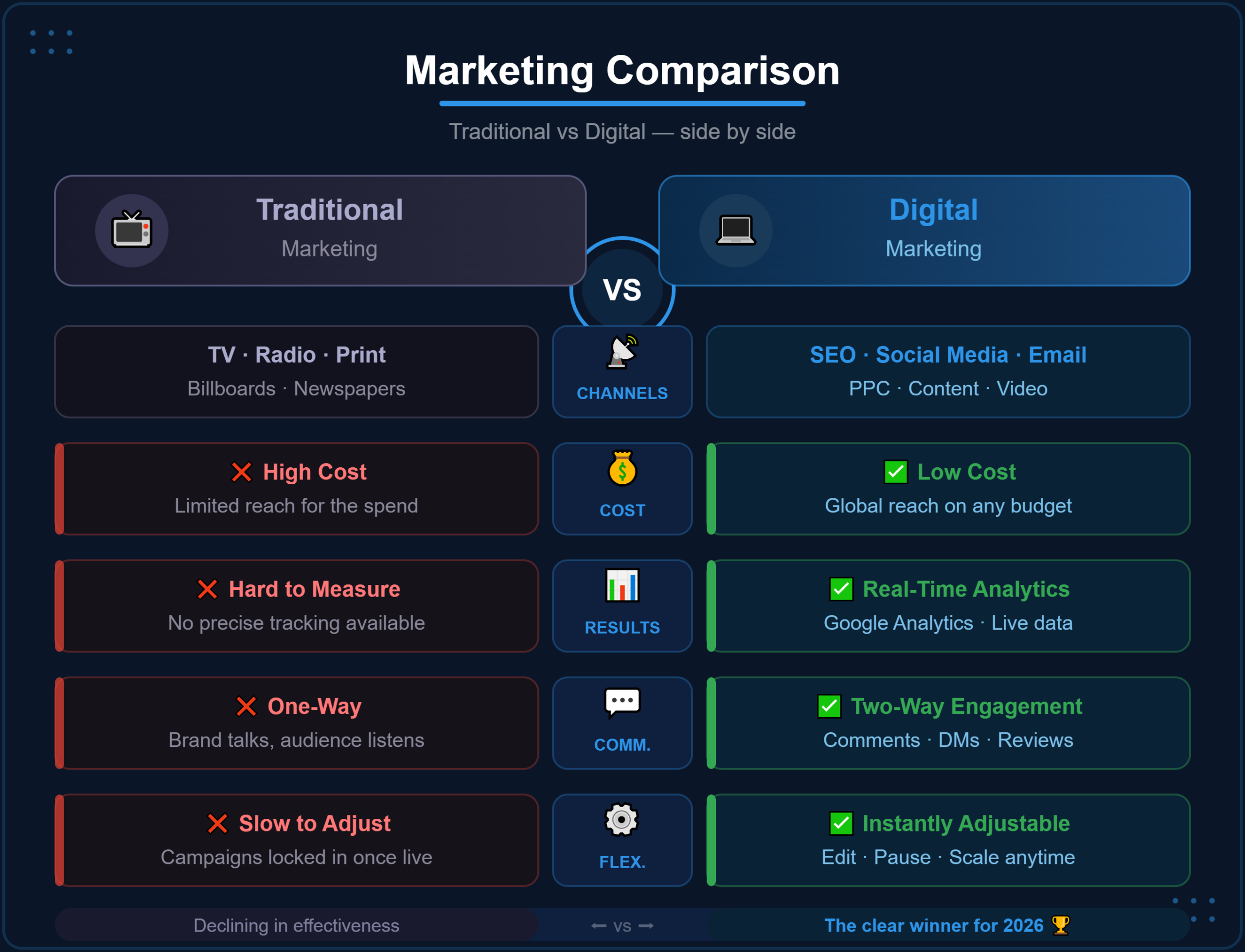
The key shift is measurability and reach. Traditional marketing is broad and hard to track. Digital marketing is precise, data-driven, and scalable on almost any budget.
Why is Digital Marketing Important in 2026?
With over 5.4 billion internet users worldwide and the average person spending more than 6 hours online daily, digital marketing is no longer optional — it is essential. Here is why businesses and individuals are investing in it more than ever:• Global reach: A small business in Lucknow can now reach customers in London, Dubai, or New York with a single well-placed ad or blog post.
• Cost-effective marketing: Running a Google Ads campaign or publishing a blog post costs a fraction of what a TV commercial or newspaper ad would.
• Better ROI: Because you can track every click, open, and conversion, digital marketing consistently delivers a higher return on investment than traditional channels.
• Targeted audience: You can show your ads exclusively to people aged 25–40, living in a specific city, interested in fitness — reaching the right person at the right time.
• Real-time performance tracking: Tools like Google Analytics and Meta Ads Manager let you see exactly what is working and what is not, often within minutes.
• Increased brand awareness: Consistent presence across search, social media, and email keeps your brand top of mind with potential customers.
Types of Digital Marketing
There are seven core types of digital marketing, each serving a different purpose. A well-rounded strategy typically uses several of them together:
1. Search Engine Optimization (SEO):-
SEO is the practice of optimizing your website so it ranks higher in Google's organic (unpaid) search results. It involves keyword research, high-quality content creation, and technical improvements that help search engines understand and trust your site. SEO is the foundation of long-term, sustainable digital marketing growth.
2. Content Marketing:-
Content marketing is about creating and distributing genuinely useful content — blog posts, videos, infographics, podcasts, and guides — that attracts and educates your target audience. It builds trust and authority over time, and is the engine that powers SEO, social media, and email marketing.
3. Social Media Marketing:-
Social media marketing uses platforms like Instagram, Facebook, LinkedIn, YouTube, and X (formerly Twitter) to build brand awareness, engage with followers, and drive traffic to your website. It includes both organic content (regular posts and Reels) and paid social advertising.
4. Email Marketing:-
Email marketing is one of the highest-ROI channels in digital marketing, with an average return of $36 for every $1 spent. It involves building a subscriber list and sending targeted, personalized messages — newsletters, promotions, welcome sequences, and follow-ups — to nurture leads and retain customers.
5. Pay-Per-Click Advertising (PPC):-
PPC, most commonly associated with Google Ads, allows businesses to appear at the very top of search results by paying for each click their ad receives. It delivers immediate visibility and is ideal for product launches, seasonal campaigns, or any situation where you need traffic fast while SEO builds in the background.
6. Affiliate Marketing:-
Affiliate marketing is a performance-based model where businesses reward partners (affiliates) with a commission for every sale or lead they generate. It is a low-risk way to scale reach, as you only pay when results are delivered.
7. Influencer Marketing:-
Influencer marketing leverages the trust and reach of social media creators to promote your brand to their engaged audiences. Micro-influencers (1,000–50,000 followers) in particular offer excellent ROI for small businesses and niche brands due to their highly targeted, loyal followings.
How to Get Started with Digital Marketing
If you are brand new to digital marketing, here are six practical steps to begin your journey with confidence:-
1. Learn the basics: Start with free resources — Google's Digital Garage, HubSpot Academy, and YouTube tutorials cover SEO, content, and ads from the ground up.
2. Create a website: Your website is your digital home base. Use WordPress, Wix, or Webflow to launch a simple, fast, mobile-friendly site.
3. Understand SEO: Learn keyword research, on-page optimization, and how backlinks work. Even basic SEO knowledge gives you a major edge.
4. Build a social media presence: Choose one or two platforms where your audience spends time and post consistently with a clear brand voice.
5. Set up Google Analytics: Install Google Analytics 4 on your website to track visitors, their behavior, and which channels are driving traffic.
6. Practice with real projects: Launch a blog, run a small Google Ads campaign, or manage social media for a local business. Hands-on experience accelerates learning faster than any course.
Latest Digital Marketing Trends in 2026
The digital marketing landscape never stands still. Here are the five trends every marketer needs to understand right now:-
• AI-powered marketing: Artificial intelligence is now embedded in content creation, ad optimization, customer segmentation, and chatbots — allowing marketers to work faster and more precisely than ever before.
• Voice search optimization: With smart speakers and mobile voice search on the rise, optimizing content for conversational, question- based queries is increasingly important for SEO.
• Short-form video marketing: Reels, YouTube Shorts, and TikTok videos continue to dominate reach and engagement across all demographics, making video creation a non-negotiable skill.
• Marketing automation: Automated email sequences, lead scoring, and retargeting workflows allow small teams to deliver personalized experiences at scale without manual effort.
• Personalized customer experiences: Generic messaging is losing ground to hyper-personalized content and offers tailored to individual behavior, preferences, and purchase history.
Conclusion
Understanding what is digital marketing is the first step toward building a business that thrives online in 2026 and beyond. From SEO and content marketing to social media, email, and paid advertising, every channel plays a role in helping you reach the right audience, build lasting trust, and grow your revenue in ways that traditional marketing simply cannot match.
The best time to start is today. Pick one channel, learn it well, and build from there. Digital marketing rewards consistency and curiosity above everything else.